This article is part of my Fatal Frame II: Crimson Butterfly Analysis series, focusing on the unfinished words Mio and Mayu almost speak in the opening scene.
At the beginning of the main story, Mio and Mayu reach the Stream of Memories, where both of them come close to saying what they have never been able to say.
“Hey… Mio…”
“Mayu, about what happened back then…”
The exchange is brief, but it is extremely important when considering Fatal Frame II: Crimson Butterfly as a whole.
That is because this scene reveals the outline of the true feelings the two sisters carried all along, yet could never bring themselves to say aloud.
The game has multiple endings, and Mio and Mayu’s relationship reaches a different conclusion in each one.
Some endings lead to a future where they accept being separate and take each other’s hands again.
Some close them inside the memories of the past.
Some turn misunderstanding into violence.
And in one ending, the wish of “Together forever” is fulfilled in its most distorted form.
In this article, I will begin with the Stream of Memories scene and examine what Mio and Mayu were trying to say, why they could not finish saying those words, and how those unfinished words are completed in each ending.
Please note that this article contains major spoilers for Fatal Frame II: Crimson Butterfly. If you want to review the main story first, I recommend starting with the Fatal Frame II: Crimson Butterfly main story overview before reading this analysis.
Opening Scene Analysis: What Mio and Mayu Were About to Say
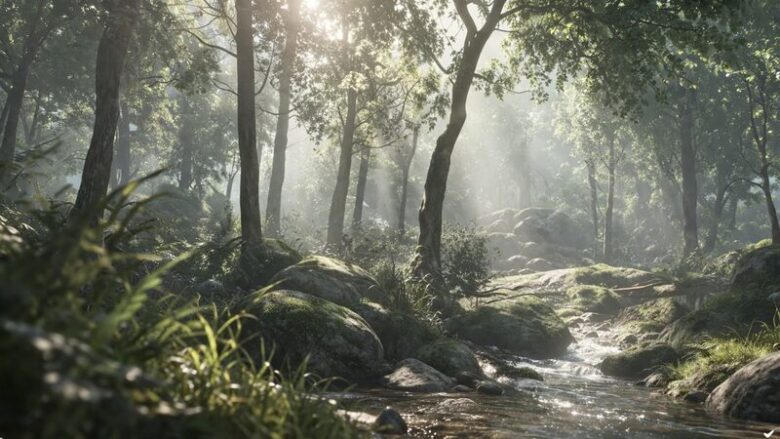
The opening scene of the main story is brief, but it already contains the core of Mio and Mayu’s relationship.
The following is a short synopsis based on the strategy and setting guide Kurenai no Mori.
Note: This scene takes place immediately after the prequel novel The Forest Where the Promise Disappeared.
Mio and Mayu were visiting the mountain village where they had spent several years of their childhood.
After summer vacation ended, this entire area was going to sink beneath the dam.
The two headed toward the Stream of Memories, where they had often played long ago.
Mayu had trouble walking along the overgrown mountain path.
Worried, Mio called out to her.
“How’s your leg? Does it hurt?”
“A little… But I’m okay.”
Water glittered in the hazy sunlight after the rain.
The forest air was damp and quiet.
Everything there looked just as it had back then.
When they reached the Stream of Memories, Mio sat down on the rocks.
As Mio began remembering that day, Mayu gently placed both hands on her shoulders from behind.
“We used to play here all the time.”
Mio looked up at Mayu and answered with a nostalgic softness.
“Yeah…”
A small silence passed.
The two looked at each other.
Then Mayu murmured, a little sadly:
“All of this will be gone soon…”
As she said this, Mayu moved a little away from Mio.
Mio noticed and asked her again:
“How’s your leg? Does it hurt?”
“A little… But I’m okay.”
As if to show that she really was fine, Mayu moved right behind Mio and sat down with her back against hers.
The two sat back to back.
Between them, there was a faint warmth that could not become words.
“Hey… Mio…”
“Hm…?”
“…Never mind.”
That small silence made the memory of that day rise again in Mio’s mind.
They had been playing by the stream as usual.
On the mountain path at dusk, Mio became anxious because it was getting late.
She let go of Mayu’s hand and suddenly ran ahead.
Mayu, who was physically weaker, desperately tried to catch up while calling Mio’s name.
“Come on, Mayu! Hurry up, hurry up! You’d better hurry, or I’m gonna leave you behind!”
Mio half-teased the slower Mayu, looking back now and then to check on her.
Then, the moment Mio faced forward again—
there was a short scream.
And the sound of something slipping and falling.
“…Mayu?”
Mio slowly approached the small cliff at the side of the path.
Even as her instincts told her not to look, she looked down.
There, Mayu was lying face down, her right leg bent unnaturally.
— If I hadn’t let go of Mayu’s hand back then, maybe we could still be running together now…
“Mayu, about what happened back then…”
Mio, who had been lost in the memory, suddenly lifted her head.
Something felt wrong.
The warmth and weight of Mayu leaning against her back were gone.
Mio looked around in a panic.
What she saw was Mayu following a wavering crimson butterfly deeper into the forest.
- In the repeated exchange about Mayu’s leg, Mio tries to maintain the relationship through familiar concern, while Mayu hides her true feelings behind “But I’m okay.”
- Both of them had something they needed to say, but neither could say it to the end.
- Their unfinished words in this scene express the quietest form of the disconnect between them.
What Mayu Was Trying to Say
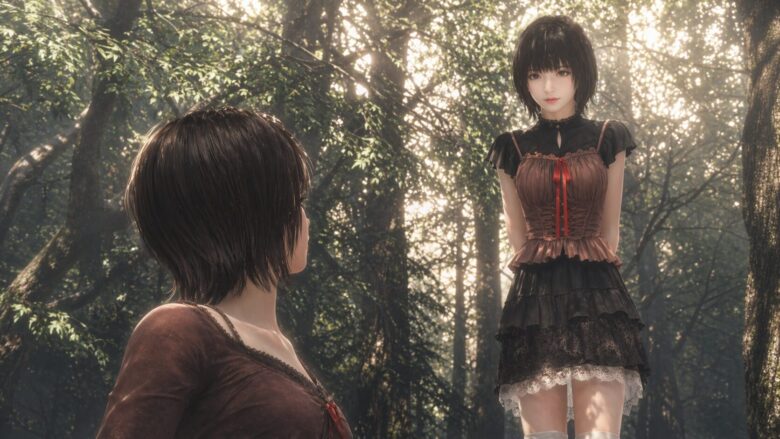
When thinking about what Mayu was trying to say, the most important clue is the line she says just before it:
“All of this will be gone soon…”
At first glance, this may sound like simple sadness over losing a place filled with memories.
However, what matters is that Mayu does not say only “this place.”
She says “All of this.”
If she were simply mourning the stream itself, the line could have ended as nothing more than, “This place will be gone soon.”
But by saying “All of this,” Mayu’s words seem to include more than the scenery in front of her.
For Mayu, what was “going to be gone” was not only the Stream of Memories.
- The feeling that she and Mio had once been one
- The relationship they had shared as children
- The self that had still been able to remain inside that relationship
For Mayu, the disappearance of this place also meant the disappearance of the time when she and Mio could still exist as they once had.
The place would be gone.
Their childhood would not return.
And Mio, too, might begin living a life separate from Mayu, moving toward a different place.
— the fear that what they had now would not last forever
The words Mayu swallowed after saying “Hey… Mio…” can be read as a question like:
- “Will we someday grow apart…?”
- “You won’t leave me behind again, will you…?”
In this scene, Mayu was trying to reveal a fear she could not yet put into clear words:
the fear that Mio might one day move away from her.
What Mio Was Trying to Say
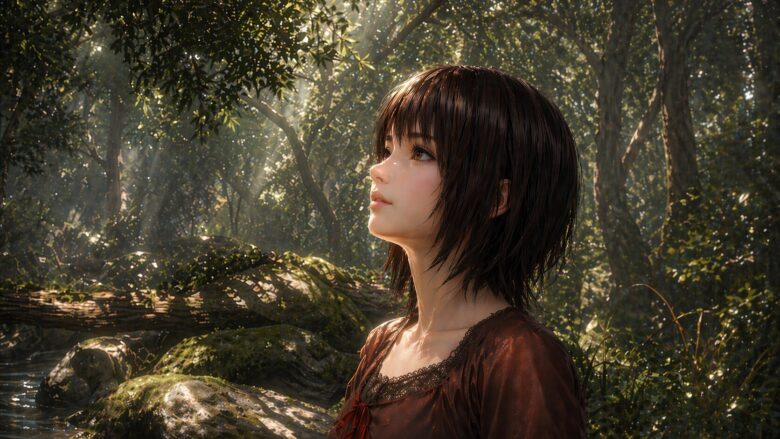
Mio’s unfinished words can be read quite clearly from the flow of her memory.
— If I hadn’t let go of Mayu’s hand back then, maybe we could still be running together now…
After this regret rises in her mind, Mio begins to say:
“Mayu, about what happened back then…”
If we read this sequence straightforwardly, what Mio was trying to say was almost certainly:
- “I’m sorry I let go of your hand…”
- “If I had held your hand that day, maybe your life would not have changed…”
In other words, Mio’s unfinished words were an apology and regret for the accident.
— She was still trapped by the past, by the fact that she had let go of Mayu’s hand that day.
In this scene, Mio was trying to acknowledge that the two of them could no longer remain exactly as they had been back then.
Why Neither of Them Could Say It to the End
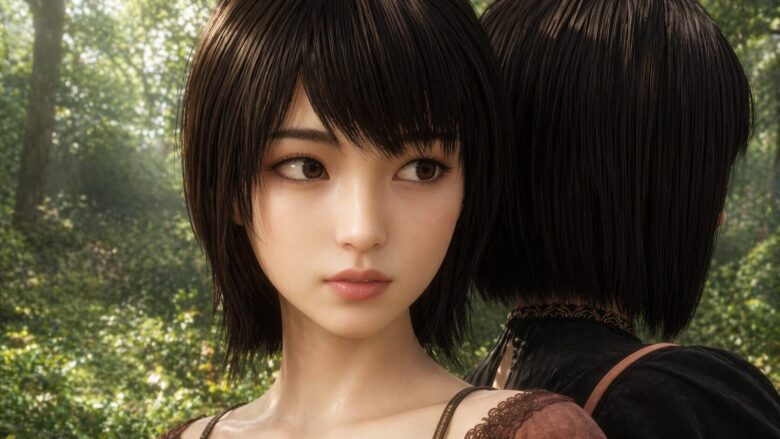
Why could neither of them say what they needed to say to the end?
Because if they had said it aloud, their relationship as it existed then might have collapsed.
Note: However, there is one important difference.
Mayu swallowed her own words with:
“…Never mind.”
But by the time Mio tried to speak, Mayu had already disappeared from sight.
In that sense, it may be more accurate to say that Mio did not swallow her words.
Rather, she was left behind after losing the very person those words were meant for.
Why Mayu Couldn’t Say It
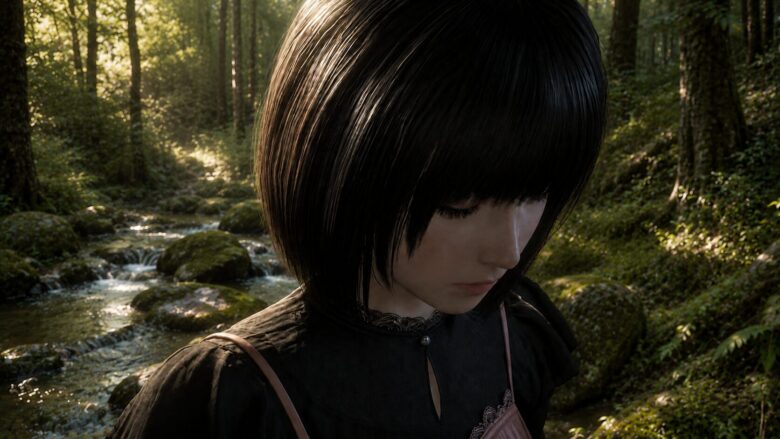
For Mayu, “Together forever” did not mean a future where two separate people would continue supporting each other.
It meant not becoming separate.
More precisely, it carried the meaning of becoming one.
That is why Mayu brought the fear to the edge of speech, then swallowed it before it could take shape.
If Mio had denied her even slightly, their relationship might have collapsed in that instant.
If Mayu had asked, “You won’t leave me, will you?”, she would have touched the possibility that Mio did not see “Together forever” in the same way she did.
The continuation of Mayu’s words would have given shape to future separation itself.
Why Mio Couldn’t Say It to the End
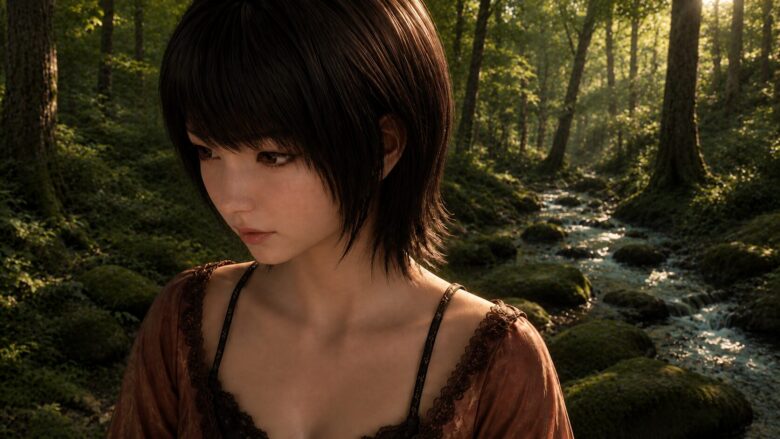
For Mio, that accident became the starting point for Mayu’s injured leg, and also for Mio’s decision to protect her.
From that day onward, the two of them gradually drifted out of alignment.
Mio’s words never fully take shape.
That is because, the moment she spoke them aloud, everything the two had kept vague until then would have become words all at once:
- the truth of the accident
- the asymmetrical relationship of protecting and being protected
- the disconnect that began after the accident
To face the relationship that had been built on the accident directly—
that would have meant admitting that even though Mio thought she had been protecting Mayu, she had never fully understood Mayu’s true fear.
The continuation of Mio’s words would have given shape to the rupture that had already happened that day.
Summary: The Different Directions Mio and Mayu Were Looking
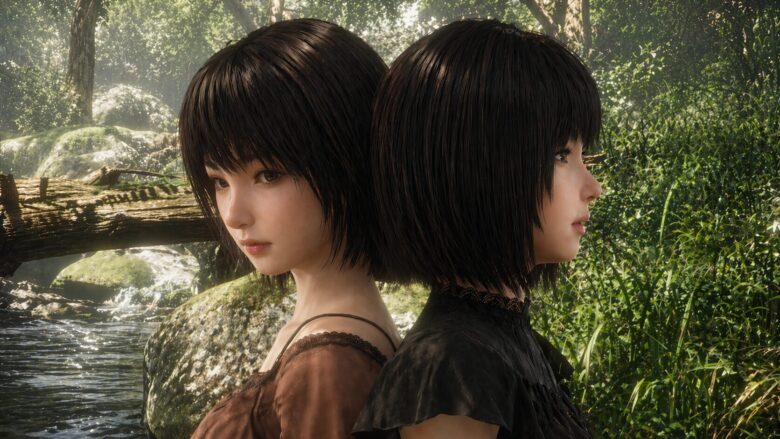
Looking back over the analysis so far, Mio and Mayu may seem to share the same silence during the opening scene.
In reality, however, they are looking in different directions.
What Mayu is looking at is the future ahead.
The possibility that Mio might move away from her.
The possibility that Mio might live a separate life and eventually go to a different place.
Mayu is afraid of a separation waiting in the future.
By contrast, what Mio is looking at is the past.
The moment she let go of Mayu’s hand.
The fact that Mayu fell alone.
The distortion in their relationship that began from there.
Mio is thinking about how to respond to the rupture that already happened in the past.
It was not that they could not speak because they understood nothing.
Rather, it was the opposite.
They could not speak because, somewhere inside, they understood that the moment those feelings became words, something between them might break.
This is the most painful part of the opening scene.
- They are still together.
- They are still sitting in the same place.
And yet, they continue to carry what they cannot say.
- Mayu cannot bear the thought of becoming separate in the future.
- Mio begins by trying to respond to the rupture that has already happened.
From the very beginning, their words seemed to be reaching in the same direction.
But they were already slightly misaligned.
And that misalignment is completed in different forms in the later endings.
How Each Ending Completes Mio’s Unfinished Words

The words Mio begins to say in the opening scene—
“Mayu, about what happened back then…”
are not fixed to a single meaning.
Rather, in this story, they can be understood as words that are completed in different ways depending on which ending the story moves toward.

According to the director, what Mio was about to say in the opening scene differs between The Promise Ending and the Shadow Festival Ending.
Depending on the ending, Mio’s unfinished words move away from simple regret over the past and begin to approach Mayu’s fear of future separation.
In other words, some endings bring Mio closer to Mayu’s side:
the side that cannot bear to be separated.
How Each Ending Gives Mio’s Words a Different Meaning
Fatal Frame II: Crimson Butterfly has multiple endings, and Mio and Mayu’s relationship arrives at a different form in each one.
Here, I will organize each ending and consider how Mio’s unfinished words from the opening scene might be completed in each case.
Lonely Road Home / One Wing Endings
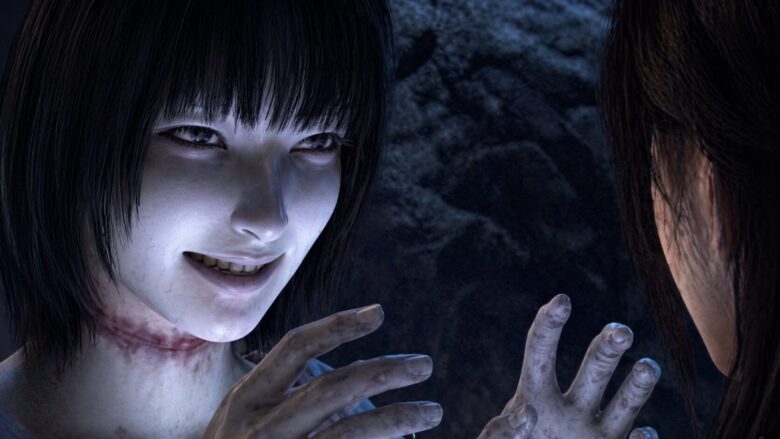
▷ Read the analysis of the Lonely Road Home / One Wing Endings here
In these endings, Mio abandons Mayu and leaves the village alone.
Mio succeeds in returning to reality, but she never truly escapes her relationship with Mayu. What remains is the feeling that Mayu is still waiting for her in that village.
For this reason, the Lonely Road Home / One Wing Endings can be read as endings where the guilt of abandoning Mayu, and the lingering attachment Mio cannot sever, remain like a punishment.
Continuation of Mio’s Words: A Possible Reading
— “Back then, I had no choice but to leave you behind…”
In the Lonely Road Home / One Wing Endings, Mio’s unfinished words do not move toward apology or atonement.
Instead, they settle into the guilt of leaving Mayu behind once again.
Even though Mio escapes the village, she cannot escape her bond with Mayu.
Because only the feeling that Mayu is still waiting in that village remains, her unfinished words can only repeat the same rupture again.
Crimson Butterfly Ending
▷ Read the analysis of the Crimson Butterfly Ending here
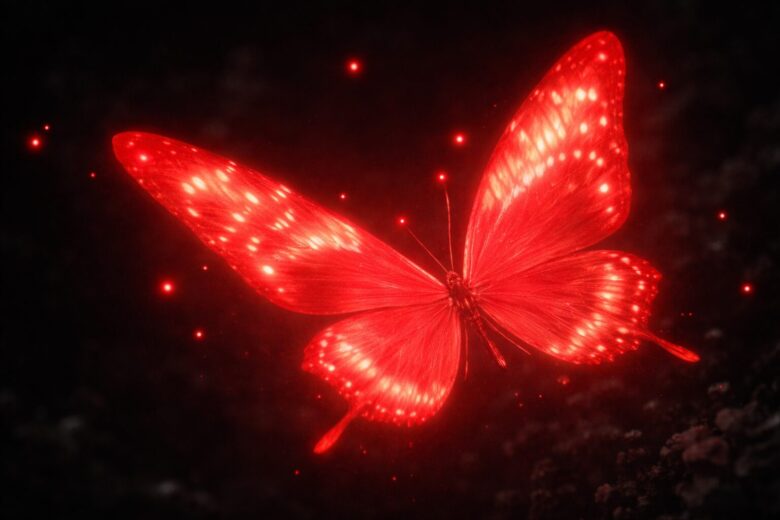
In this ending, Mio takes Mayu’s life with her own hands.
Mio does not reject Mayu’s inability to endure living separately.
However, her acceptance cannot be realized as living together.
It can only take the form of ending Mayu’s life.
For this reason, the Crimson Butterfly Ending can be read as an ending where Mio is pulled into Mayu’s wish, a wish that cannot endure separation.
Continuation of Mio’s Words: A Possible Reading
— “Back then, I didn’t realize how much pain you were in…”
In the Crimson Butterfly Ending, Mio’s response moves away from the act of letting go of Mayu’s hand itself.
Instead, it moves toward the fact that she could not understand Mayu’s pain.
As a result, Mio does not reject Mayu’s inability to endure living separately.
She accepts it by ending Mayu’s life.
The Abyss Ending
▷ Read the analysis of The Abyss Ending here
In this ending, both sisters return, but only anxiety continues to remain inside Mio.
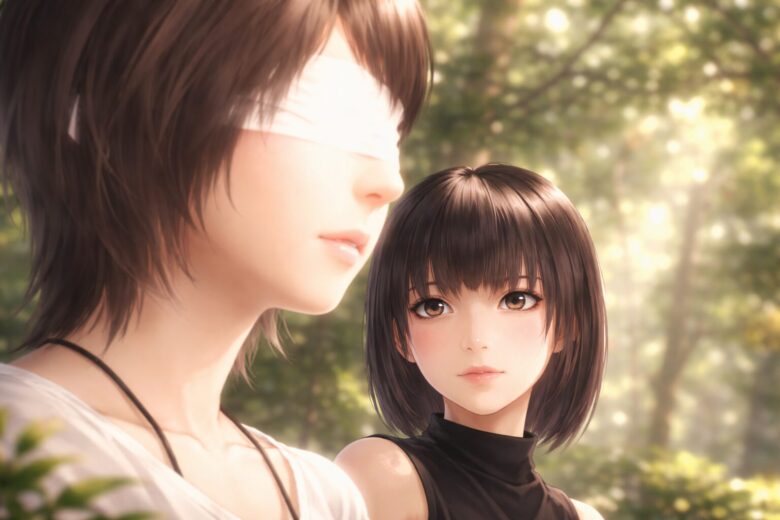
Mio saves Mayu, but loses her sight as the price. After that, their relationship becomes one in which Mayu stays by Mio’s side and supports her.
However, the fear itself does not end. In the later afterstory, even Mio’s ability to distinguish Mayu from Sae begins to blur.
For this reason, The Abyss Ending can be read as an ending of stagnation, where the two survive, yet their relationship continues inside an indistinct fear.
Continuation of Mio’s Words: A Possible Reading
— “Back then, leaving you behind stayed with me all this time…”
In The Abyss Ending, Mio’s next words are completed not as regret for something that has already ended, but as a feeling that still remains and has never disappeared.
Even though the two survive, they are not truly saved.
Mio continues her relationship with Mayu while still carrying anxiety and fear inside her.
The Promise Ending
▷ Read the analysis of The Promise Ending here
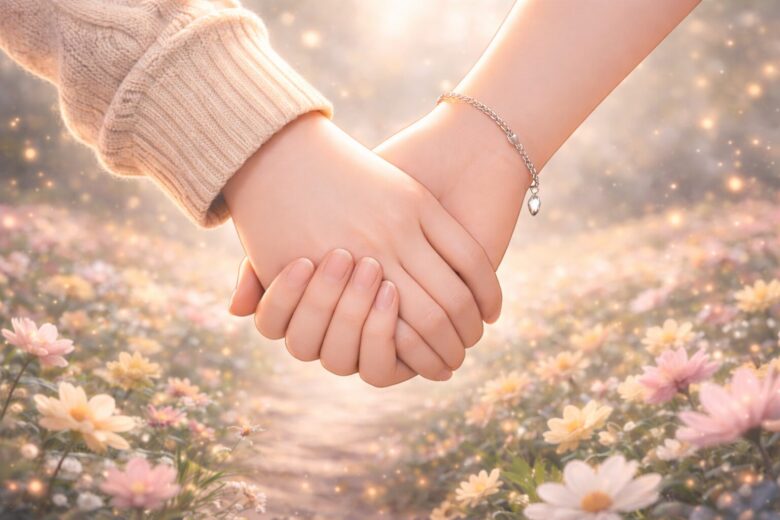
In this ending, the two sisters survive and take each other’s hands again.
Yae and Sae come to understand each other and throw themselves into the Utsuro, completing the ritual.
Mio and Mayu, meanwhile, acknowledge that they are separate beings.
Even so, they choose a path where they will not let go of each other.
For this reason, The Promise Ending can be read as a mature ending where they accept separation, and still choose each other again.
Continuation of Mio’s Words: A Possible Reading
— “Back then, if I had held this hand, maybe I wouldn’t have hurt you…”
In The Promise Ending, Mio’s words are completed as regret for hurting Mayu.
What Mio chooses here is not to fall together with Mayu.
Instead, she chooses to keep holding Mayu’s hand while they are both still alive.
Her answer is not to become one with Mayu, but to promise:
“I’ll never let you go again.”
Shadow Festival Ending
▷ Read the analysis of the Shadow Festival Ending here
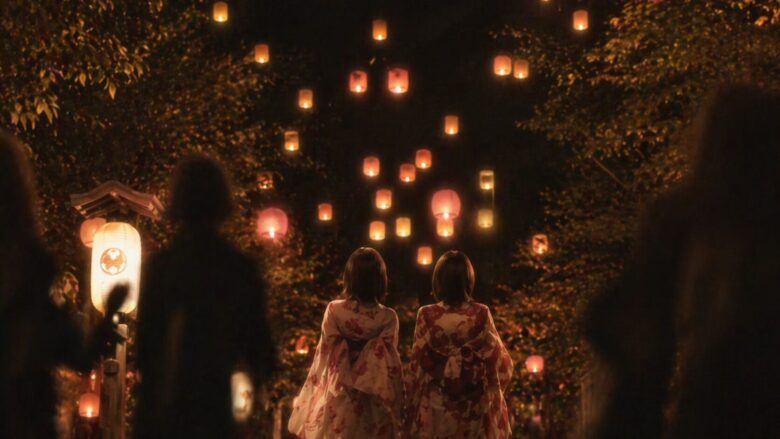
In this ending, The Repentance occurs, and Mio confesses her true feelings to Mayu for the first time.
After learning the reality that they will live and die separately, the two give up on overcoming that pain.
Instead, they choose to close themselves inside the memories of the time when they still knew nothing.
For this reason, the Shadow Festival Ending can be read as an ending where reality is not resolved, and the two close themselves inside the feeling of the past.
Continuation of Mio’s Words: As Suggested by the Setting Materials
— “Back then, maybe I should have fallen together with you…”
In the Shadow Festival Ending, Mio’s words move from regret over letting go of Mayu’s hand into the thought that this time, she should have fallen together with Mayu.
Here, for the first time, Mio chooses not merely to atone.
Her answer becomes:
“This time, we fall together.”
She chooses to stay with Mayu until the very end.
Frozen Butterfly Ending
▷ Read the analysis of the Frozen Butterfly Ending here
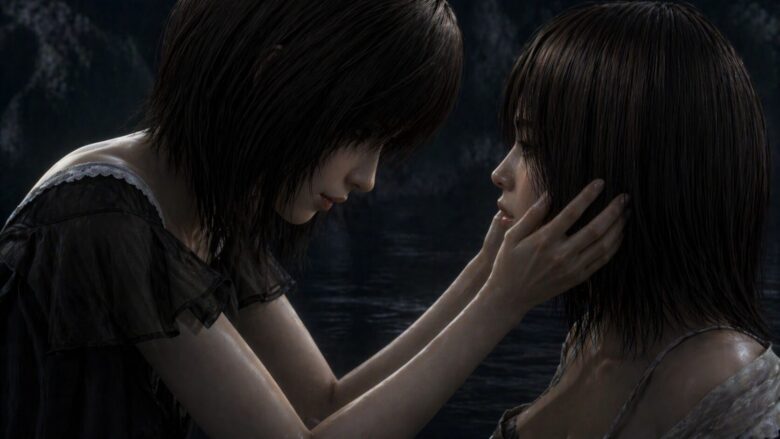
In this ending, Mayu places her hands around Mio’s neck and tries to pull the two of them into a slow, forced death together.
Mio’s refusal to carry out the ritual reaches Mayu as if her feelings themselves have been rejected.
That misunderstanding turns into despair, and then into violence.
What breaks here is not love itself.
It breaks because the meaning of that love no longer matches between them.
For this reason, the Frozen Butterfly Ending can be read as an ending where a lack of understanding and a fatal misreading turn into violence.
Continuation of Mio’s Words: A Possible Reading
— “Back then, if I had been able to tell you properly, maybe it wouldn’t have ended like this…”
In the Frozen Butterfly Ending, Mio’s unfinished words can be read as regret over failing to communicate her true feelings clearly.
Mio simply did not want to hurt Mayu.
However, her words are received as rejection.
To Mayu, they sound as if Mio has declared that she is going to leave her behind.
For this reason, “back then” does not refer only to the moment Mio let go of Mayu’s hand.
It also echoes as regret over the fact that, until the very end, the two of them failed to understand what the other truly meant.
Black Flame Butterfly Ending
▷ Read the analysis of the Black Flame Butterfly Ending here
This is an ending in which the promise of the two sisters who fall into the Utsuro is fulfilled in its most distorted form.
Mio chooses to stay beside Mayu even though she never fully understands Mayu’s wish.
As a result, the promise is fulfilled.
But it is not fulfilled as living together.
It is fulfilled as losing everything so that they will never be separated.
For this reason, the Black Flame Butterfly Ending can be read as the most twisted conclusion: an ending where only the promise is fulfilled while the two remain misaligned.
Continuation of Mio’s Words: A Possible Reading
— “Back then, I always wished we could go back and start over before I ever let go of your hand…”
In the Black Flame Butterfly Ending, Mio chooses to stay beside Mayu even though she never fully understands what Mayu truly wanted.
As a result, the promise is fulfilled not as living together, but as losing everything so that they will never be separated.
Futagomori / Twin Enclosure Ending
▷ Read the analysis of the Futagomori / Twin Enclosure Ending here
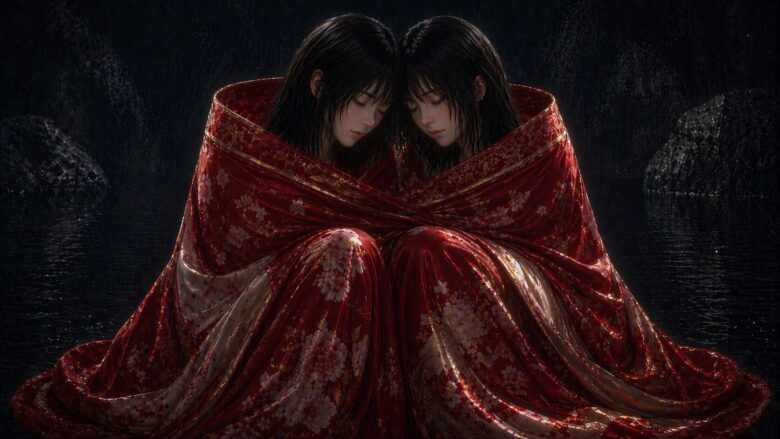
In this ending, The Repentance occurs, and the two sisters close inward into a shared form, reaching a kind of fusion.
Neither sister is left behind.
Instead, both dissolve equally into the darkness and disappear as two crimson butterflies.
For this reason, the Futagomori / Twin Enclosure Ending can be read as a conclusion in which the two abandon reality and arrive at a closed world meant only for them.
Continuation of Mio’s Words: A Possible Reading
— “Back then, I never meant to leave you behind…”
In the Futagomori / Twin Enclosure Ending, Mio’s unfinished words seem to move beyond apology or atonement and tilt toward the wish never to be apart again.
As a result, the two close inward together, abandon reality, and reach a form of fusion that exists only for them.
Mio may not have wanted to become one from the beginning.
Rather, after choosing again and again not to be separated, she finally arrives at a place where becoming one is the only form left.
Sprouting Wings + Remaining Sun Endings

▷ Read the analysis of the Sprouting Wings + Remaining Sun Endings here
In the Sprouting Wings Ending, Mio and Mayu reconstruct their relationship through understanding.
For the first time, Mio understands Mayu’s fear on the same deep level, and Mayu learns that she is still needed by Mio.
When their hands finally overlap in a true sense, the Utsuro and Minakami Village are purified, and the two sisters survive.
For this reason, the Sprouting Wings Ending can be read as a conclusion where mutual understanding and survival finally coexist after the wish to deny separation has been confronted.
In the Remaining Sun Ending, Mio and Mayu are no longer merely people who confine or protect each other.
Instead, they remain beside each other in reality, with understanding between them.
For this reason, the Remaining Sun Ending can be read as the quietest form of salvation: one that exists without pretending the tragedy never happened.
Continuation of Mio’s Words: A Possible Reading
— “Back then, I finally understood… part of me had wanted to fall with you, too.”
In the Sprouting Wings + Remaining Sun Endings, Mio finally understands Mayu’s fear at a deeper level.
Here, “back then” does not point only to regret over the moment she let go of Mayu’s hand.
It also leads to the realization that, inside Mio as well, there had been a wish to fall with Mayu and share the same pain.
Seen this way, the root of Mio’s unfinished words remains consistent.
It is a response to the rupture that began that day.
Only the form of that response changes from ending to ending.
Incidentally, even though the Shadow Festival Ending also involves “falling together,” Mio’s choice there remains closer to regret: the feeling that she should have fallen with Mayu too.
By contrast, in the Sprouting Wings Ending, Mio reaches an understanding beyond regret or sentiment.
She finally realizes that the wish had existed within her, too.
Summary: The Opening Silence Already Foreshadowed Their Endings
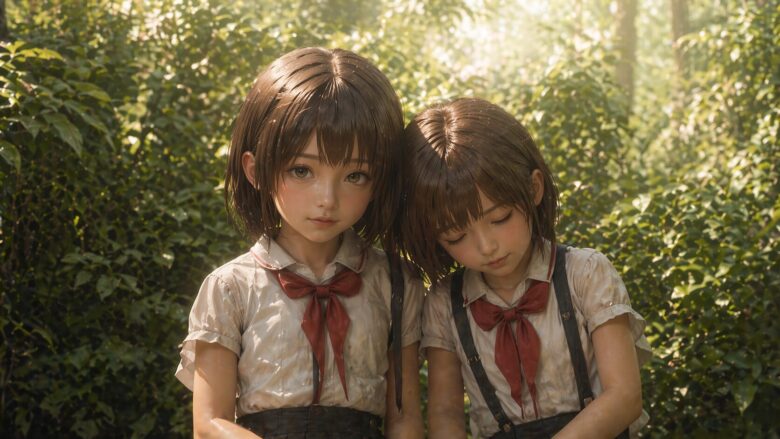
In Mayu’s line—
“All of this will be gone soon…”
the phrase “all of this” did not refer only to the place filled with memories.
It also carried the relationship the two sisters had shared as children, and even the version of Mayu who had existed within that relationship.
All of it was becoming something that would soon be lost.
At the Stream of Memories in the opening scene, what Mayu was likely trying to voice was her fear of future separation:
“We won’t become separate, will we…?”
Mayu wanted to make sure, amid the feeling that everything was disappearing, that Mio would not leave her behind.
By contrast, what Mio was trying to say was a response to the rupture of the past:
“I let go of your hand that day.”
However, that response is not fixed to a single form.
In The Promise Ending, it is completed as regret:
“If I had held your hand that day, maybe I wouldn’t have hurt you.”
In the Shadow Festival Ending, it is completed as the will to go with Mayu:
“Back then, maybe I should have fallen together with you.”
In this way, Mio’s unfinished words are completed in different forms depending on the ending.
- Mayu was afraid of future separation.
- Mio was trying to answer the rupture of the past.
The two seemed to be looking at the same “Together forever.”
But in reality, they had been looking at slightly different things from the very beginning.
Even so, neither of them said anything in that scene.
They were not silent because they understood nothing.
Rather, they may have sensed that the moment those feelings became words, the ambiguity holding their relationship together would break.
The Stream of Memories scene at the beginning of the main story is not merely an introduction before anything has happened.
Already submerged within it was the prototype of every ending that would later branch outward.
The two sisters were still together.
And yet, at that very moment, Mayu could not say, “Don’t leave me,” and Mio could not say, “I’m sorry I let go of your hand that day.”
They were sitting in the same place, unable to say what mattered most.
The silence at the opening of the main story.
It was a quiet foreshadowing of every ending that would later come.
In the next article, I will organize the main story itself and examine how Mio and Mayu’s emotional states change over the course of the game.
I hope you will continue reading.
Fatal Frame II: Crimson Butterfly Analysis Hub
Fatal Frame II: Crimson Butterfly Analysis Series
Analysis Article #2: The Cliff Scene|Why Mio and Mayu See Different Worlds
Analysis Article #5: The Opening Scene|The Unfinished Words and Their Connection to the Endings
Analysis Article #6: Main Story Analysis|How Did Mio Change Throughout the Story?
Analysis Article #7: Crimson Butterfly Ending|Why Did Mio End Up Killing Mayu?
Analysis Article #8: Lonely Road Home / One Wing Endings|Explaining the Price Mio Had to Bear
Analysis Article #9: Frozen Butterfly Ending|Mayu’s Tearful Smile and the Head in the Hina Doll Room
Analysis Article #10: Shadow Festival Ending|Why Did Mio Say, “This Time, We Fall Together”?
Analysis Article #11: The Promise Ending|The Meaning of “I’ll Never Let You Go Again”
Analysis Article #14: Sprouting Wings + Remaining Sun Endings|What It Means for Mio and Mayu to Return Alive
*This article is part of the “Fatal Frame II: Crimson Butterfly Analysis” series.
*The images used in this article include unofficial AI-generated images inspired by the world of the game, as well as screenshots from FATAL FRAME II: Crimson Butterfly REMAKE and Project Zero 2: Wii Edition. All rights to Fatal Frame II: Crimson Butterfly belong to Koei Tecmo Games.
*This article refers to certain official materials that are currently difficult to obtain. Their contents are summarized only where necessary for understanding the story, while the article itself focuses mainly on analysis and interpretation.
コメント欄