This article is part of my Fatal Frame II: Crimson Butterfly Analysis series.
Here, I will examine the hidden premises behind the story, including the fate of Mio and Mayu’s father, the structure of Minakami Village, the Crimson Sacrifice Ritual, and the meaning behind Mio’s loss of sight.
Fatal Frame II: Crimson Butterfly is already a complete story on its own.
However, when looking through guidebooks, the Premium Box materials, and related sources, several important details begin to appear—details that are either left unexplained in the game itself or only hinted at in a vague way.
For example:
- What kind of person was the father Mio and Mayu lost when they were young?
- Where exactly is Minakami Village located?
- What roles did each family in Minakami Village serve?
These are not easy to understand from the main story alone.
In this article, I will organize these hidden background details as carefully as possible, while also exploring how they shape the tragedy of Mio and Mayu.
Please note that this article contains major spoilers for Fatal Frame II: Crimson Butterfly. If you want to review the main story first, I recommend starting with the Fatal Frame II: Crimson Butterfly main story overview before reading this analysis.
About Mio and Mayu’s Father
Misao Amakura
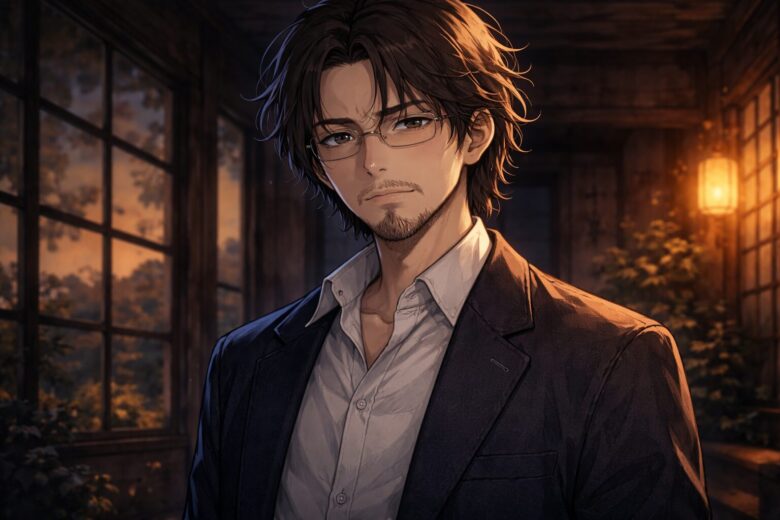
Misao Amakura was the father of Mio and Mayu in Fatal Frame II: Crimson Butterfly.
He was born into the Asou family and was a descendant of Dr. Asou, the inventor of the Camera Obscura, a device capable of photographing things invisible to the naked eye.
Misao lived with his wife Shizu, his elder twin daughter Mayu, and his younger twin daughter Mio in a remote mountain village in the Minakami region.
The village where they lived was said to have a legend: if you wander into the mountains, you will be drawn into a “village erased from the map.”
Just as the legend warned, Misao, too, was drawn into Minakami Village and never returned.
After Misao disappeared, Shizu moved to the city with Mayu and Mio. For the twins, the Minakami region became a nostalgic hometown.
Note: Minakami Village is protected by a spiritual barrier that prevents its miasma from leaking outside. When the barrier begins to fray because of the miasma inside, an entrance appears.
According to guidebooks and related materials, Mio and Mayu were raised by their mother with the understanding that their father was dead.
For the two sisters, their father was someone they:
- knew only through photographs
- had almost no real memories of
Because of this, they seem to have recognized him as
a presence that hardly felt real to them.
Mio and Mayu grew up without the father who should have protected the family.
As a result, they came to see each other as their only emotional refuge.
Mayu deepened her dependence on Mio, while Mio internalized the role of supporting Mayu.
The relationship between the twins, which should have been equal, gradually hardened into an asymmetrical protector-and-protected dynamic.
Misao Amakura’s Cause of Death
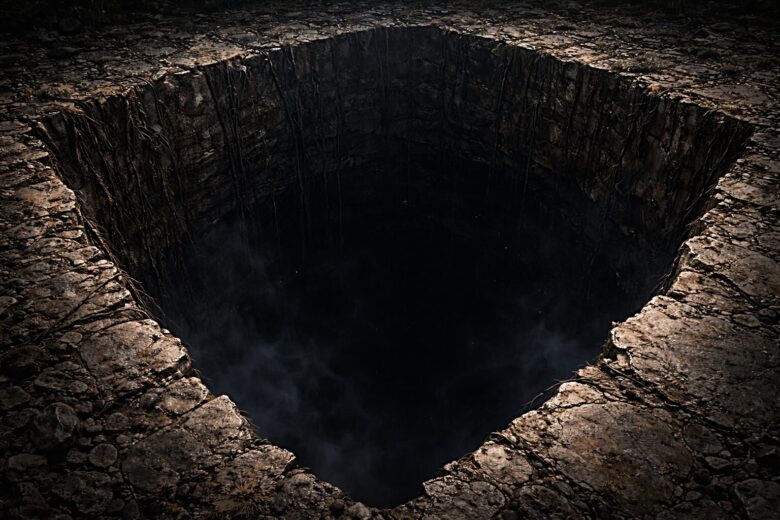
When Mayu fell from the cliff, Misao joined the search party out of concern for the two sisters, who had not returned.
While searching for Mio and Mayu, he wandered into Minakami Village.
Misao died after falling into the Utsuro, also known as the Hellish Abyss.
For Mio and Mayu, Misao was:
- “someone who suddenly disappeared because of some accident”
- “someone who no longer had anything to do with them”
- “something that existed outside their reality”
In other words, he was a presence that disappeared from their minds before they could truly understand him.
Neither of them would have imagined that their father had died in a way connected to them.
Mayu’s Dream on the Day Before the Story
Mayu has a dream on the day before the main story begins.
In the dream, Misao appears and desperately tries to stop the two sisters from entering the mountains.
Even though Mayu understands in the dream that this is a warning from her late father, she follows a crimson butterfly and continues into the mountains.
- “Mio is with me, so I’ll be all right.”
- “Mio always protects me.”
Misao Trapped in the Utsuro
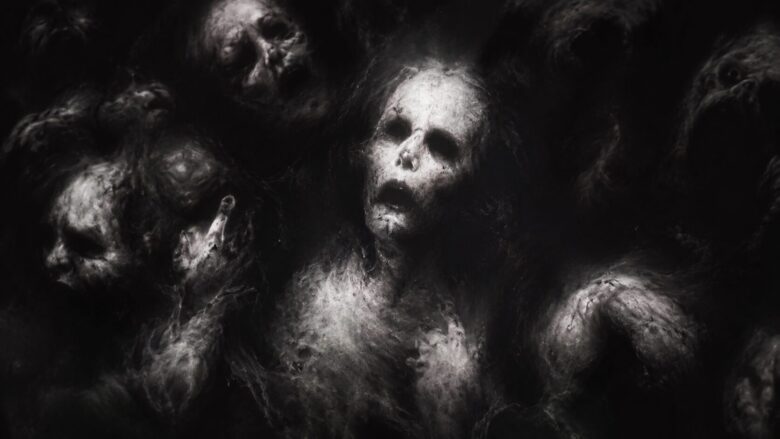
In The Abyss Ending, Mio sees inside the Utsuro.
At that moment, the wraith staring back at Mio is none other than Misao Amakura.
In the other endings, Mio does not lose her sight even when she sees into the Utsuro. Yet only in this ending does she lose her sight.
Why does this happen?
I would like to explore the reason from two different angles.
Reason 1: Mio’s Sense of Reality Was Shattered
Normally, people believe that:
- Dead people cannot be met again
- All ties with the dead have already been severed
However, inside the Utsuro, Mio meets the eyes of her father, who is still struggling in agony.
Sight is the faculty through which we recognize reality.
- She sees an impossible existence, her father, in an impossible place, the Utsuro.
- The premise that “her father has long been gone” collapses.
- The way she had seen the world until then is shattered.
Result:
The reality she had believed in no longer held together, and she lost the ability to see reality itself.
= blindness.
In other words, the Utsuro is not simply “a hole that blinds anyone who looks into it.”
Rather, it is a place that can break the mind of the person who sees it and distort their very perception of reality.
As a result, the person may lose the light itself.
Reason 2: Mio Stepped into Mayu’s World
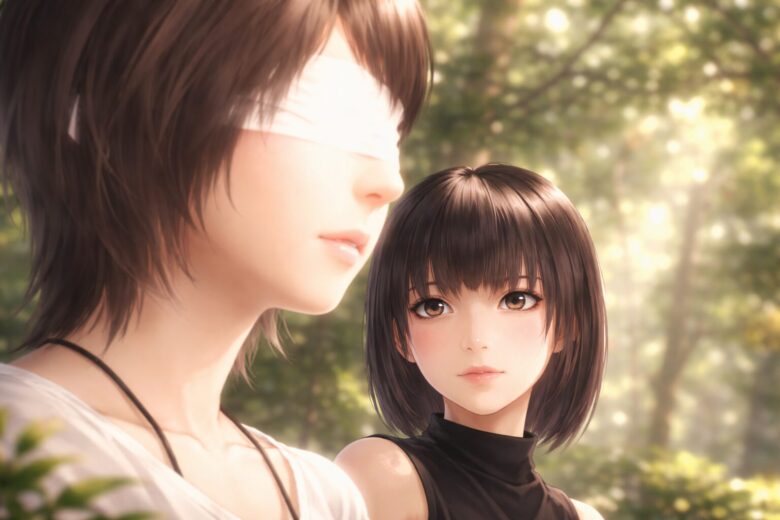
For the act of seeing to function, it is necessary to maintain a state in which the self and the object remain separate.
Note: Separation = “I am me, and you are you.” A state of being divided. A distance between two beings.
- There is distance from the object
- There is a boundary between oneself and the object
- Inside and outside remain separate
Only under these conditions can something be “seen.”
To put it another way, as the distance between the self and the object approaches zero, the act of “seeing” can no longer function.
Note: Fusion = “I am you, and you are me.” A state of overlap and unity. Zero distance.
For Mio, her eyes were a way of connecting to the world outside herself—a reality where “I am me, and you are you,” and separate beings can exist through separation.
However, when Mio sees Mayu falling into the Utsuro, she is confronted with an inward, enclosed world—a world built on “I am you, and you are me,” where two beings overlap through fusion.
Mio reaches out her hand.
This is nothing less than an abandonment of separation: an act of stepping into Mayu’s world.
Note: For more on Mayu as an inner, closed world, please see my analysis of Mayu’s inner, closed world.
Result:
Mio came too close to zero distance, and could no longer maintain separation.
= blindness.
When Mio saw Mayu falling into the Utsuro, she reached out her hand.
At first glance, this choice looks like a natural act of trying to help Mayu.
But structurally, there is a decisive contradiction here.
- recognizing the world open to the outside and living as an individual being through separation and distance
- trying to save Mayu by stepping into fusion and zero distance
These two states cannot coexist within the same sense of distance.
Even so, Mio tried to take Mayu’s hand without fully letting go of herself as an individual.
Mio reaches out to Mayu
↓
She steps into the abandonment of separation, toward fusion
↓
However, she does not stop “seeing,” which still requires separation
↓
She cannot maintain distance, yet she is still trying to see at zero distance
↓
A contradiction is born
↓
Blindness
What happens in The Abyss Ending is not simply that Mio tried to become one with Mayu.
Rather, she tried to become one while still refusing to stop seeing.
Note: She erased distance, while also trying to preserve the perception that requires distance.
Because of this, Mio could neither:
- fully surrender to fusion by falling together with Mayu
- preserve separation by abandoning Mayu
Caught between the two, she lost the ability to see the world that was open to the outside.
The result was the loss of her sight.
Note: This can also be read as the price Mio paid for stepping halfway into fusion without fully letting go of separation.
Details of Minakami Village
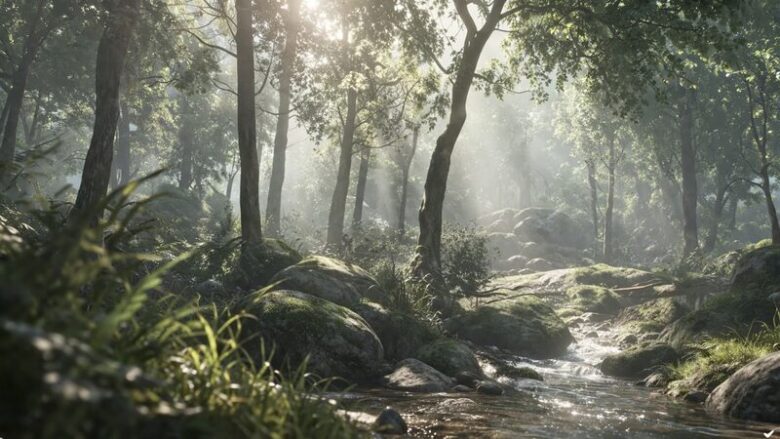
After passing through the neighboring villages around the Minakami region, one must cross a dense forest and continue deep into the mountains.
There, if you continue deeper along the mountain path, you eventually reach a stream.
From there, a narrower animal trail leads toward Minakami Village.
At this point, it becomes clear that Minakami Village is a place greatly separated from ordinary human life.

Even reaching the stream from the opening scene of the main story would not be easy.
If Mio and Mayu, around the age of five, often left a nearby village and played around this stream, then they must have had extraordinary stamina and a strong sense of direction.
According to the Premium Box setting materials, however, Shizu often took the two girls there when they were little because it was near their home.
When they grew a little older, they apparently began sneaking off to play there by themselves.
For the two sisters, this stream was a place full of memories.
There are some details that faintly suggest the area around Mie Prefecture.
For example, Azami Kiryu uses the dialect word “uttsui,” which is later reflected in the English in-game text as “beautiful” in the phrase “beautiful butterflies.” Surnames such as Tsuchihara and Osaka are also often seen in the Kinki region.
However, names such as Kiryu and Tachibana lean more toward the Kanto region, and the characters’ speech is generally standard Japanese.
Because of this, it is safest to treat this only as an atmospheric inference.
From the neighboring villages, Minakami Village was recognized as a secluded village that deeply valued hidden rituals.
It was also commonly understood that people should not go near it during the period of the Crimson Sacrifice Ritual, which was held once every several decades.
On the other hand, Minakami Village was not completely sealed away from the outside world.
- Merchants sometimes visited the village
- There was at least minimal contact with the outside world
These details can also be confirmed in the story.
For example, when he was young, Ryozo Munakata visited Minakami Village with his merchant father.
During that visit, he became acquainted with Itsuki Tachibana and Mutsuki Tachibana, as well as Yae Kurosawa and Sae Kurosawa.
When Minakami Village was destroyed, only Yae survived. Later, Ryozo married Yae.
Because the game mentions the Dajokan Proclamation of 1873, it is certain that the last Crimson Sacrifice Ritual must have taken place after 1874.
However, the exact year in which Minakami Village was destroyed is never clearly stated.
Since film projectors appear in the setting, the 1920s to 1930s seem likely, but this remains an estimate.
The Crimson Sacrifice Ritual
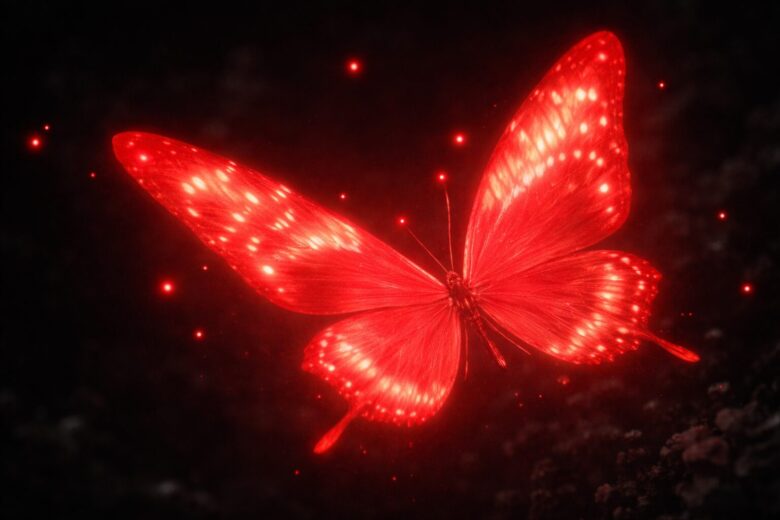
The Crimson Sacrifice Ritual is a hidden ritual performed to suppress the miasma of the Utsuro, a hole connected to the underworld.
Minakami Village was an isolated community where bloodlines had become increasingly concentrated, making twin births more common.
The villagers believed that twins who became one could manifest divine power.
For that reason, twins occupied the central role in the Crimson Sacrifice Ritual.
- If the ritual succeeds, crimson butterflies are born, and the miasma of the Utsuro subsides.
- If the ritual fails, or if it is not performed, a substitute ritual known as the Shadow Ritual is carried out.
- After the Crimson Sacrifice Ritual, the surviving twin is called the Remaining.
- When the Remaining successfully turns their other half into a crimson butterfly, a red mark appears on their neck as proof that the twins have become one.

Many crimson butterflies are already drifting throughout the village.
However, these butterflies were likely only the remnants of past Crimson Sacrifice Rituals—traces of pacification.
They were not the power to seal the Utsuro forever.
The Utsuro begins to stir again with time, and each time it does, a new completion of the ritual is required.
That is why, even though crimson butterflies already existed in the village, Minakami Village needed to repeat the ritual again.
Why the Ritual Can Fail
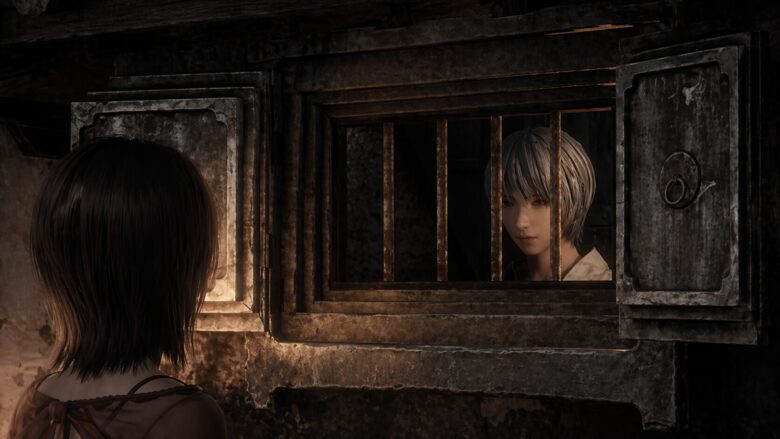
If one twin’s feelings are stronger than the other’s, the ritual fails.
At first, it seems natural to think, “Wouldn’t the ritual be more likely to succeed if the feelings were stronger?”
However, what the ritual requires is not the feeling of caring for the other person.
What matters is how closely their desire to become one is aligned.
The more intense those feelings are, the farther the twins move away from fusion.
- I love you
- I feel sorry for you
- I want to protect you
- I don’t want to lose you
All of these are emotions based on separation.
“Caring for the other person” = “You and I are separate beings.”
In this state, the two remain “two” no matter how far they go.
They move farther away from the true essence of the Crimson Sacrifice Ritual: returning to one.
That is why the ritual fails.
Note: As an exception, even if one carries emotions based on separation, the ritual can still be completed if both twins ultimately accept the conclusion of fusion.
Failure condition
The twins never reach fusion and remain two separate beings until the end.
Success condition
At the final moment, the boundary separating the two comes undone.
The “Uttsui” Butterflies — Beautiful Butterflies
The beautiful butterflies are a special kind of crimson butterfly born when twins are bound by powerful feelings.
If powerful feelings remain in the direction of separation, the ritual fails.
If those feelings overlap in the direction of fusion, they become beautiful butterflies.
After her remains were cast into the Utsuro, Azami noticed an especially sparkling crimson butterfly—a beautiful butterfly.
That butterfly represented a way for the twins to share their feelings and join hands without either of them having to kill the other.
The butterflies born in The Promise Ending and the Sprouting Wings Ending can be understood as beautiful butterflies.
The Shadow Ritual and the Public Shadow Festival
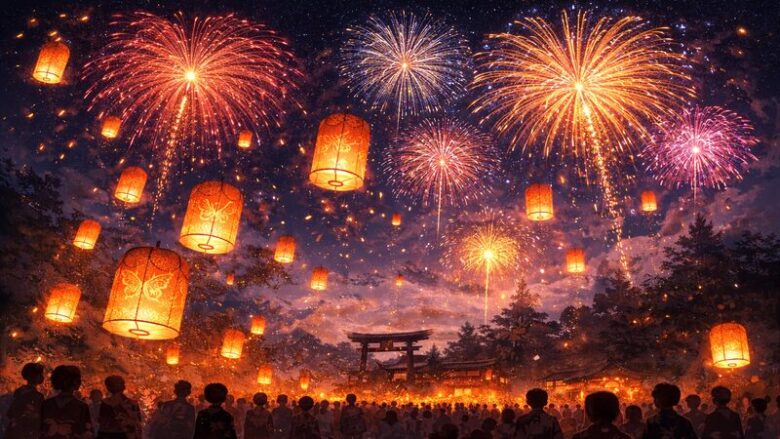
This tradition can be understood in two forms.
- The original Shadow Ritual, which existed as a hidden rite inside Minakami Village
- The public Shadow Festival, which spread outside the village in a safer form
In the surrounding villages, this public Shadow Festival still remains today, held by the branch of Kureha Shrine.
It is known as a festival where people launch fireworks and butterfly-patterned lanterns into the sky.
Crimson butterflies are guardian spirits and symbols that suppress calamity.
Launching lanterns shaped after butterflies can be understood as a substitute act for the original rite.
In the original rite, the village had to offer a marebito—an outsider brought into the village—as a sacrifice, so Minakami Village needed to maintain ties with the outside world.
From the perspective of the village priests, they wanted to invite outsiders, but they did not want those outsiders to become suspicious.
For that reason, it can be inferred that they used the branch of Kureha Shrine to spread a safe public festival—the Shadow Festival—so that outsiders would not realize the true nature of the ritual.
The Kusabi
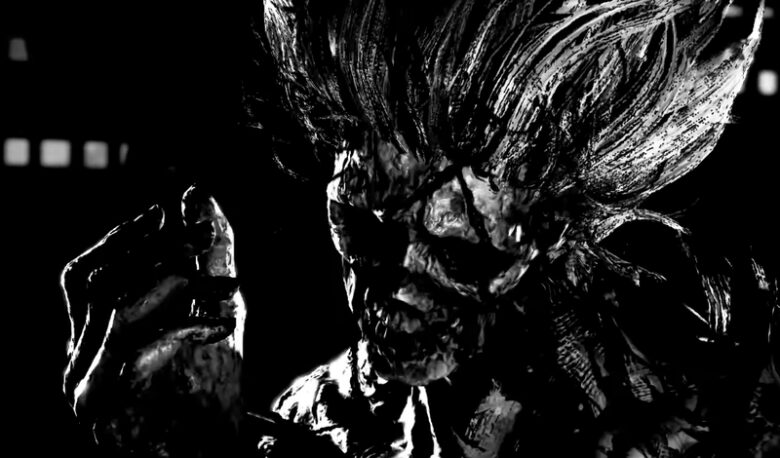
The marebito chosen to serve as a human pillar in the original Shadow Ritual was called the Kusabi.
In order to inflict as much pain as possible, the Kusabi’s body is flayed.
The greater the Kusabi’s suffering, the longer the Utsuro can be suppressed.
What becomes important here is why pain is necessary at all.
Normally, pain seems like something that weakens a person.
However, in this work, pain is treated in the opposite way.
It draws out the attachment hidden within that person.
- I want to live
- I don’t want this to end
- I want to remain in this world
Feelings like these, born from pain, make the person strongly feel:
I am still here.
If the Utsuro is not merely a place that swallows people, but a place that threatens existence itself and melts away the individual, then the Kusabi used to suppress it needed a strong power to remain as an individual without being easily swallowed.
The Kusabi was not simply a sacrifice.
Rather, the Kusabi can be understood as an existence whose attachment to the living world has been pushed to its limit through intense suffering.
The greater the pain, the stronger the Kusabi’s feelings become.
As a result, the time it takes for the Kusabi to dissolve into the Utsuro becomes longer.
Note: A marebito is someone who knows the world outside the village.
Because they had touched a wider world and more ordinary lives than the villagers, they were more likely to develop strong lingering attachments to this world.
That may be why they were suited to become the Kusabi.
The key to suppressing the Utsuro lies in how firmly the boundary between this world and the otherworld can be maintained.
That power can arise in two different directions:
- closing two beings into one
- resisting dissolution as an individual
For that reason, either fusion or self-preservation becomes necessary.
Deep Path
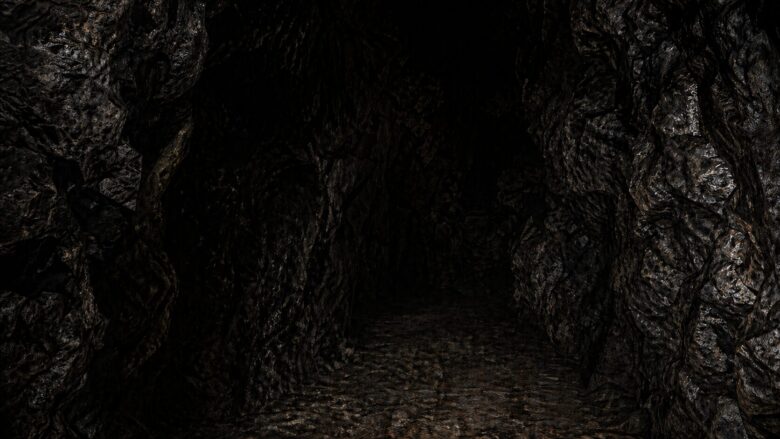
Beneath each major house in Minakami Village, there are cave-like passages known as the Deep Path.
Among them, the Deep Path beneath Kurosawa House is longer than any other, and what lies at its end is the Utsuro.
At the end of that dark and dangerous path is the place where two separate beings are returned to one.
When seen this way, walking through the Deep Path before the ritual was not merely a matter of moving from one place to another.
It was the road by which two people, born as separate beings, returned to the place where they had once been one before birth—
a womb-like path of return.
Misono Hill
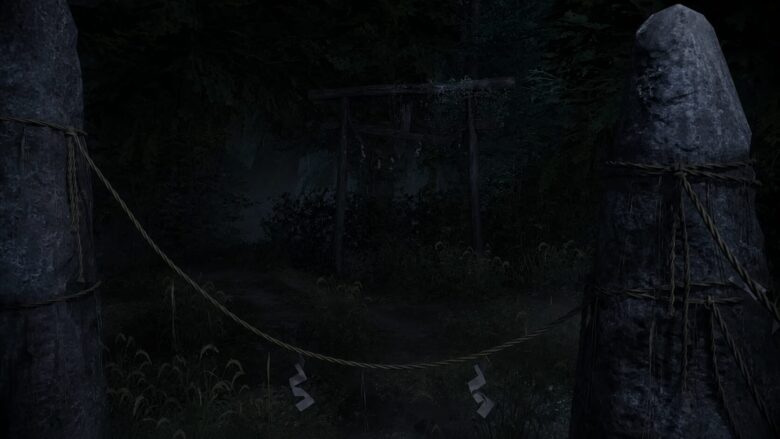
Misono Hill is an open plaza at the entrance to Minakami Village.
It is located on a high place overlooking the entire village.
At its center, there is a pedestal, and the area around it is surrounded by stone pillars wrapped with shimenawa ropes.
The villagers who were not directly involved in the ritual could not take part in the hidden rite.
During the Crimson Sacrifice Ritual, villagers who were not directly involved in the hidden rite gathered at Misono Hill instead.
There, they lit torches, prayed, and sang hymns as they sent off the crimson butterflies.
The Utsuro exists deep underground, directly beneath the central pedestal of Misono Hill.
Even within the game itself, the locations are arranged so that this position matches.
The Roles of Each House in Minakami Village
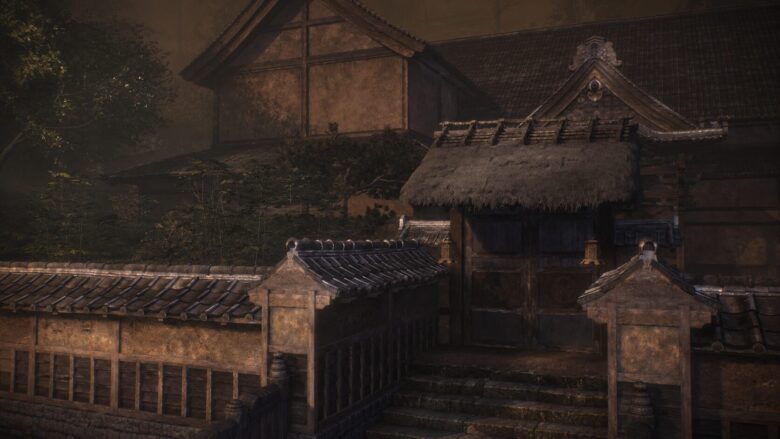
Because Minakami Village was formed as a settlement of people who protected its rites and rituals, each house was assigned a role related to the rituals.
In addition, all of the houses were built facing Kurosawa House, the home of the family that oversaw the village’s rites.
Osaka House
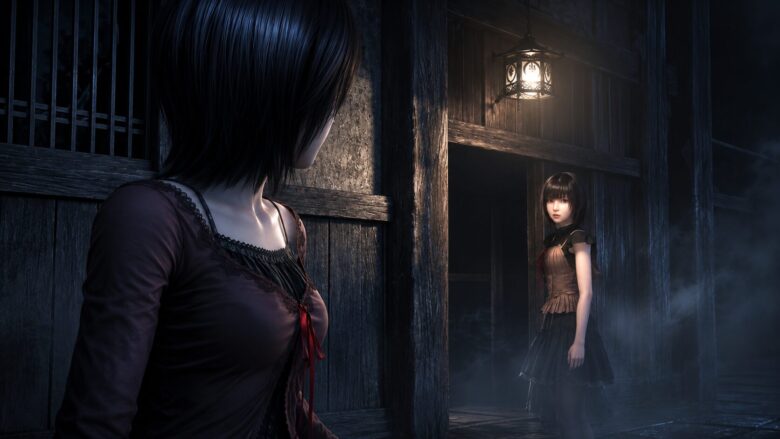
The first residence that appears when descending from Misono Hill is Osaka House.
Osaka House was responsible for monitoring arrivals to and departures from the village.
It could also be described as the house responsible for screening marebito.
Visitors were required to stop at Osaka House first, have their presence reported to Kurosawa House, and then receive permission to stay in the village.
Once permission was granted, Osaka House could be used as lodging.
Tachibana House and Kiryu House
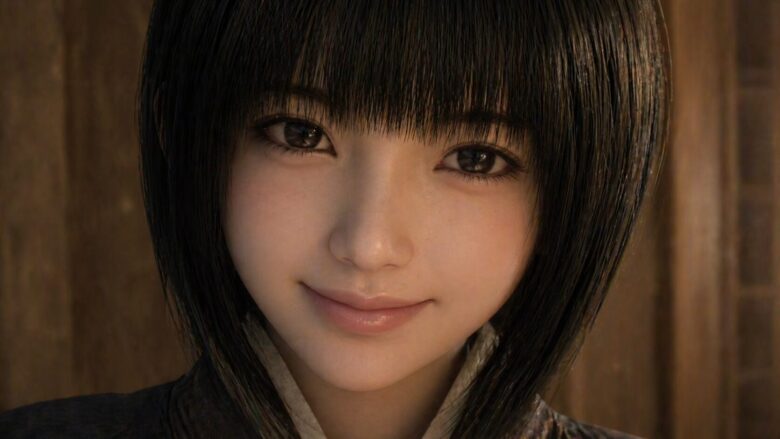
Tachibana House and Kiryu House are located near the center of the village.
The two houses are nearly identical in structure, and they are connected by both a corridor and an underground passage.
Before the Crimson Sacrifice Ritual, one Twin Shrine Maiden would stay in each house, where they would perform rituals of prayer and purification.
In other words, these houses played the important role of preparing the Twin Shrine Maidens through purification rites.
Long before Yae and Sae were born, a murder incident caused by Akane and her doll took place in Kiryu House.
Because of that incident, the Kiryu family line was once cut off.
Later, someone from Kurosawa House inherited and restored Kiryu House.
However, it is said that the spirits of Akane and the doll continued to wander through Kiryu House.
Tsuchihara House
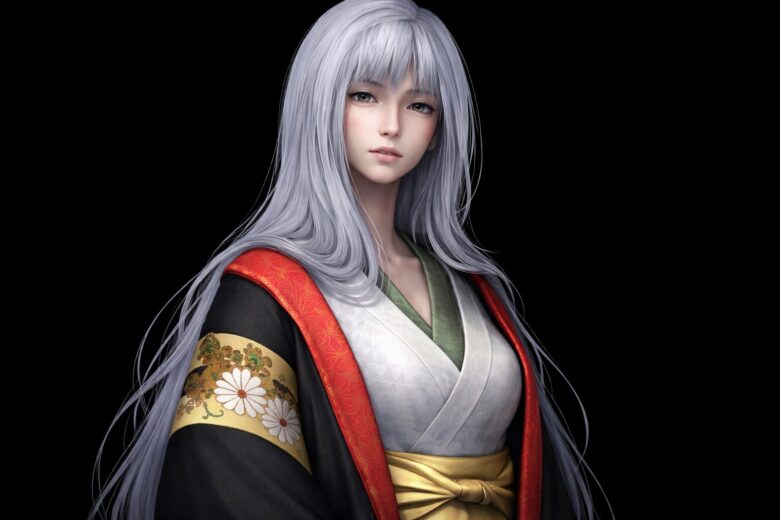
Tsuchihara House was responsible for managing Kureha Shrine, Misono Hill, and the Minakami Village Storehouse.
Its role was to manage the places connected to the village’s hidden rites.
The storehouse was a place where criminals were imprisoned and judged.
It was also where the Remaining would live after the ritual.
In most cases, the surviving half of the Twin Shrine Maidens suffered mental collapse after completing the Crimson Sacrifice Ritual.
Because of this, they could no longer live an ordinary life and were forced to spend the rest of their lives inside the storehouse.
Note: However, a Remaining whose mind did not break, such as Ryokan Kurosawa, could return to normal life.
Kureha, who appears in Project Zero 2: Wii Edition, was a Remaining from birth, since her twin was stillborn.
She appears almost like a female version of Itsuki.
According to the director, Kureha was originally conceived as a possible future version of Mio: a girl who lost Mayu and could never leave Minakami Village.
Summary: The Hidden Premises Behind the Story
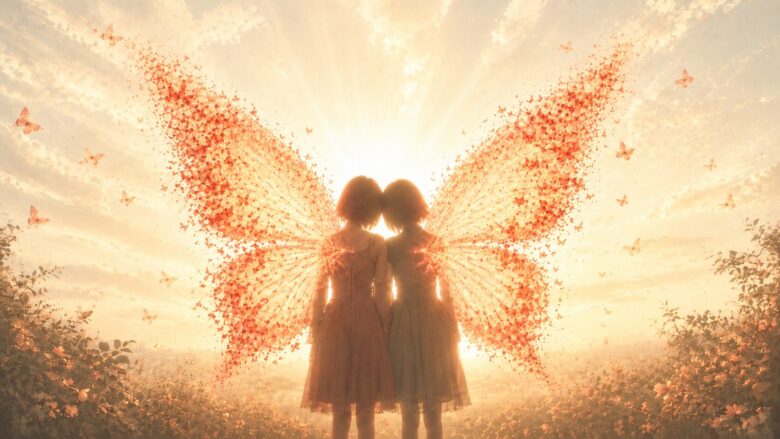
In this work, the “hidden premises” functioned as structural conditions that made Mio and Mayu’s endings possible.
The asymmetrical relationship between the twins, strengthened by the absence of their father, was fixed in place by the closed structure and rituals of Minakami Village.
Eventually, it led toward the collapse of separation itself.
The ending they reach, then, can be understood as something that had already begun taking shape before the story even started.
In the next article, I will delve into the prequel events before Mio and Mayu arrive at Minakami Village, their emotional states, and the differences between the worlds each of them was seeing.
If you are interested, I hope you will continue reading.
Fatal Frame II: Crimson Butterfly Analysis Hub
Fatal Frame II: Crimson Butterfly Analysis Series
Analysis Article #2: The Cliff Scene|Why Mio and Mayu See Different Worlds
Analysis Article #5: The Opening Scene|The Unfinished Words and Their Connection to the Endings
Analysis Article #6: Main Story Analysis|How Did Mio Change Throughout the Story?
Analysis Article #7: Crimson Butterfly Ending|Why Did Mio End Up Killing Mayu?
Analysis Article #8: Lonely Road Home / One Wing Endings|Explaining the Price Mio Had to Bear
Analysis Article #9: Frozen Butterfly Ending|Mayu’s Tearful Smile and the Head in the Hina Doll Room
Analysis Article #10: Shadow Festival Ending|Why Did Mio Say, “This Time, We Fall Together”?
Analysis Article #11: The Promise Ending|The Meaning of “I’ll Never Let You Go Again”
Analysis Article #14: Sprouting Wings + Remaining Sun Endings|What It Means for Mio and Mayu to Return Alive
*This article is part of the “Fatal Frame II: Crimson Butterfly Analysis” series.
*The images used in this article include unofficial AI-generated images inspired by the world of the game, as well as screenshots from FATAL FRAME II: Crimson Butterfly REMAKE and Project Zero 2: Wii Edition. All rights to Fatal Frame II: Crimson Butterfly belong to Koei Tecmo Games.
*This article refers to certain official materials that are currently difficult to obtain. Their contents are summarized only where necessary for understanding the story, while the article itself focuses mainly on analysis and interpretation.
コメント欄