This article is part of my Fatal Frame II: Crimson Butterfly Analysis series, in which I examine the relationship between Mio and Mayu and the psychological structure beneath it.
In the previous article, I examined their father’s fate, Mio’s loss of sight, and the structure of Minakami Village.
Fatal Frame II: Crimson Butterfly is a story about the emotional disconnect between its twin sisters.
It is not merely a horror game. Beneath its surface lies the relationship between two sisters who love each other, yet cannot see the same world.
In this article, I will focus on Mio and Mayu’s respective states of mind and explore the differences between the worlds they see.
Please note that this article contains major spoilers for Fatal Frame II: Crimson Butterfly. If you want to review the main story first, I recommend starting with the Fatal Frame II: Crimson Butterfly main story overview before reading this analysis.
Mio and Mayu: Basic Information
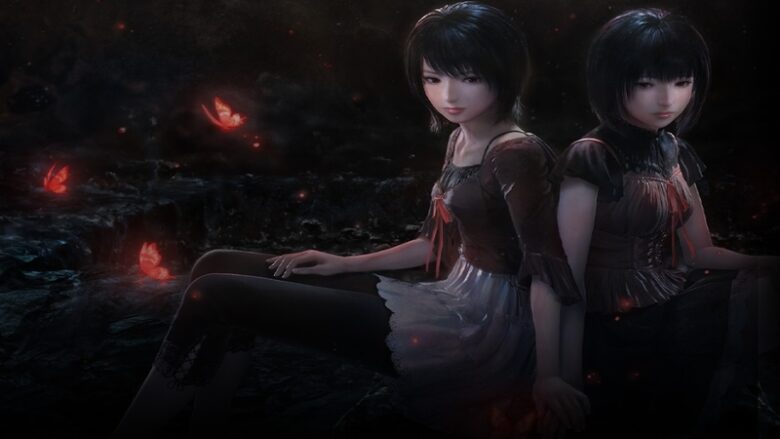
Mio
Mayu’s younger twin sister.
Bright, energetic, and outgoing, with some sensitivity to spirits.
Practical and action-oriented.
She comes to understand things after Mayu has already sensed them.
She feels responsible for the lasting effects of Mayu’s leg injury.
She is self-conscious about gaining weight and attends ballet classes.
She wears clothing from a casual line produced by a ballet tutu brand.
She and Mayu have never talked about the cliff accident.
Mayu
Mio’s older twin sister.
Quiet, reserved, and introverted, with strong sensitivity and spiritual awareness.
Intuitive and deeply attuned to others.
She senses things before Mio does.
Because of the lasting effects of an injury to her right leg, she cannot run well.
She watches Mio at ballet class from the corner of the studio, sitting with her knees drawn up.
She wears clothes from the same brand as Mio.
She and Mio have never talked about the cliff accident.
_
Mayu had been in contact with spirits since childhood, which may have made it difficult for her to distinguish between reality as an unfolding process and the unseen as an already-completed outcome.
Spirits are the lingering traces of events and emotions that have already come to an end.
Mayu was always aware of presences that belonged to this “already-ended side” of the world.
Even events that had not yet occurred could register as though she had already experienced them, with only the emotions that come after the ending arriving first.
Because of this, Mayu carries the feeling of loss before anything has actually been lost. Even a relationship that still remains intact comes to feel like something that will one day disappear.
By contrast, Mio comes to understand events in step with the passage of real time.
She takes in what happens before her, makes judgments one thing at a time, and moves forward accordingly. Unlike Mayu, she does not reach the ending before it arrives.
Mayu experiences the world from its outcome, while Mio comes to understand it through its unfolding process.
Even when they live through the same event, they are not looking at the same world.
Mio and Mayu Before Entering Minakami Village
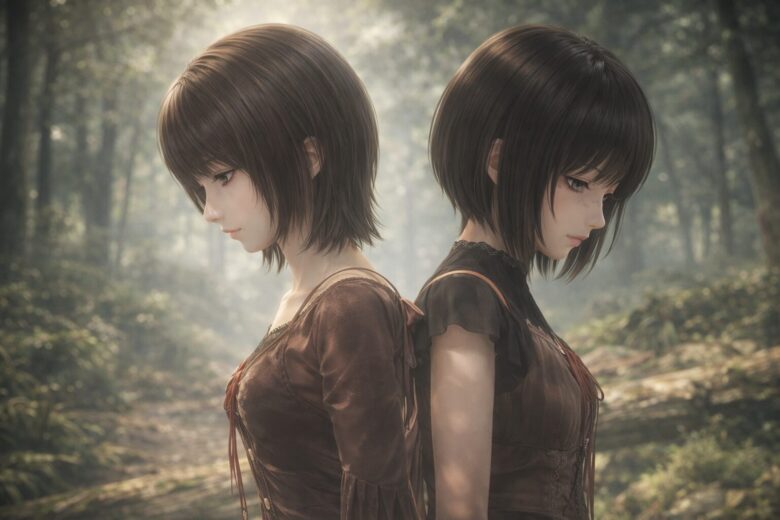
The important point is that, by the time they entered Minakami Village in their mid-to-late teens, their relationship had already taken a definite shape.
Having lost their father in childhood and grown up relying on one another, the twins had internalized an asymmetrical dynamic:
- Mayu: the one protected by Mio
- Mio: the one who protects Mayu
This protector-and-protected dynamic had become part of how each of them understood herself.
Even in their ordinary lives, the differences between the two were already clear.
At ballet class, Mayu:
- watches from the sidelines
- remains seated
- keeps her eyes on Mio
She stays where she is, choosing to look only at Mio.
Mayu is not interested in ballet itself.
What matters to her is only:
- that Mio is dancing
- that Mio is there
From this, Mayu’s world can be understood as converging on Mio—an inward, enclosed world.
By contrast, Mio:
- tries ballet
- improves
- steps forward
Through these experiences, she continues to expand a world open to the outside.
Without realizing it, Mio is also moving in a direction that leaves Mayu behind.
- Mayu → remains still (stagnation)
- Mio → moves forward (progress)
They remain in the same space, yet they no longer see the same world.
The Defining Events That Forced Them Apart
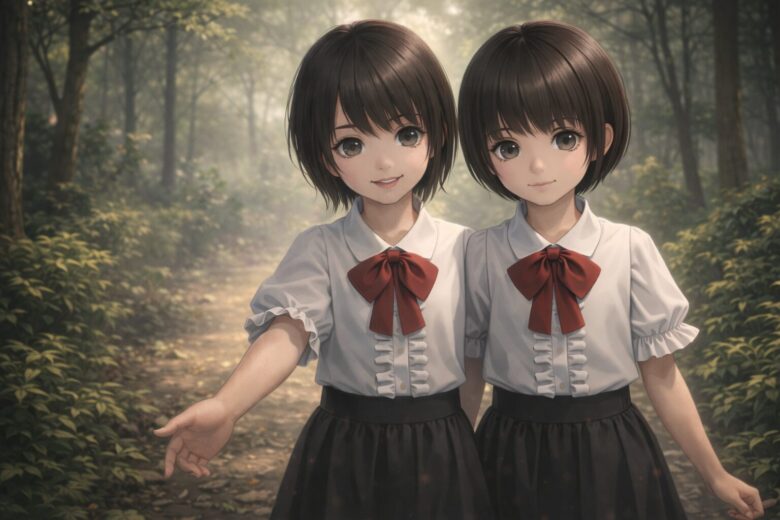
When they were young, Mio and Mayu were so alike that it was difficult to tell one from the other.
They almost seemed to be one.
“Together forever. Promise.”
It was a phrase the two of them repeated to each other naturally, without giving it any special thought.
But one day, they were suddenly forced to become aware of themselves as separate individuals.
The Shadow Festival
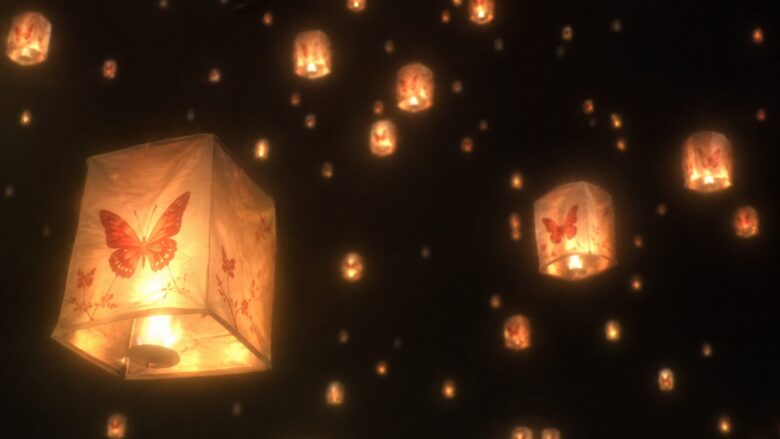
As children, Mio and Mayu attended the Shadow Festival at a branch of Kureha Shrine.
It was a familiar festival, one they had attended many times before.
But that day was different.
When they were swept into the festival crowd, they lost hold of each other’s hands.
No matter how desperately Mayu tried to catch up with Mio, the crowd swept her away again and again, until Mio disappeared from sight.
Mayu experienced despair for the first time.
For Mayu, the future had always seemed self-evident:
- Mio and I will always be together.
- We will go home together.
- We will grow up together.
- We will live together.
It felt so natural that Mayu held an absolute conviction: Mio, of all people, could never be lost.
And then, at the Shadow Festival, she was separated from Mio.
What Mayu experienced was not merely the anxiety of a child who had become lost.
It was the merciless reality that the person who was supposed to be beside her could disappear with terrifying ease, entirely beyond her control.
Until then, Mio had been someone Mayu could simply find whenever she looked for her.
But at the festival, that was no longer true.
- No matter how hard she searched, Mio was nowhere to be found.
- No matter how loudly she called, her voice could not reach her.
- No matter how far she reached, she could not touch her.
The cheerful murmur of the festival continued mercilessly, as if mocking her—as if Mayu’s sense of loss meant nothing at all to the outside world.
The world around her was bright and lively, and yet she alone had been left behind.
For the first time, Mayu learned:
“Mio can disappear.”
“Mio can go somewhere beyond my reach.”
And the greatest fear of her life took root in her heart.
- The Shadow Festival was Mayu’s first forced separation from Mio.
- Without Mio, Mayu cannot tell where she stands in the world.
- Her sense of who she is becomes uncertain.
- Her world begins to collapse.
For Mayu, the festival crowd was not merely a crowd.
It was the outside world that stole Mio—the very outline of Mayu’s own self—from her.
The Cliff Accident
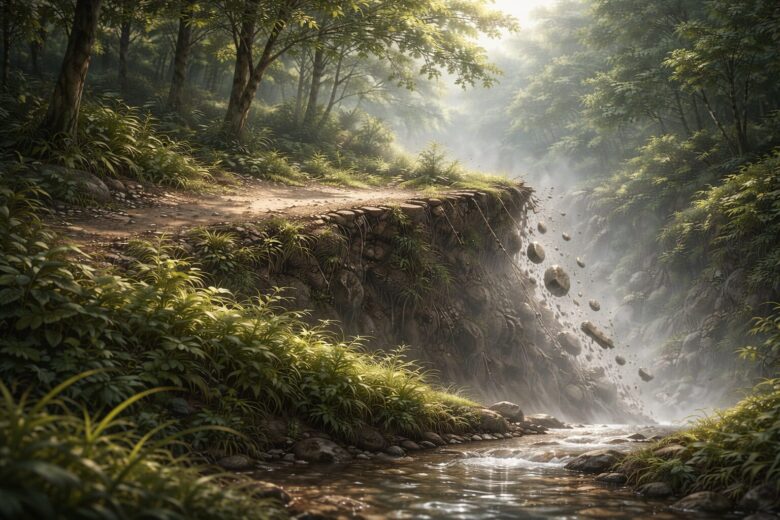
The cliff accident was the decisive event that made it impossible for Mio and Mayu to remain one.
Their secret playground was a beautiful stream beyond the forest.
The animal trail leading away from the stream followed a cliffside path toward Minakami Village.
One afternoon, while the two girls were playing in their secret place, Mayu followed a crimson butterfly all the way to the entrance of Minakami Village.
Mio, who was with her, noticed that something was wrong and pulled Mayu back toward the path home.
They had explored farther than they meant to, and the light around them slowly began to fade.
It was already dusk.
Mio became afraid that their parents would worry.
(If we get home too late, maybe they won’t let us go exploring by ourselves anymore…)
Mio let go of Mayu’s hand and, in a panic, started running ahead.
“Come on, Mayu! Hurry up, hurry up! You’d better hurry, or I’m gonna leave you behind!”
Mio glanced back at Mayu from time to time, teasing her as she spoke.
Mayu, who was slower than Mio, could not catch up no matter how hard she ran.
“Wait! Mio, please! Don’t leave me behind…!”
Mayu pleaded, but Mio kept running. As she watched Mio’s back recede ahead of her, Mayu lost her footing and fell over the cliff.
Mio stopped when she heard Mayu’s short cry.
With a growing sense of dread, she slowly approached the edge of the cliff and looked down.
There, she saw Mayu lying face down, her leg bent at an unnatural angle.
“…I-I’m sorry… I’m so sorry…”
Mio could do nothing but repeat her apology.
Mio remembers almost nothing of what happened after that.
Mio ran down to Mayu at the bottom of the cliff.
Mayu slowly sat up.
But Mio’s relief never came.
Holding her broken leg, Mayu kept laughing through her tears as though something inside her had broken.
Unable to bear the shock, Mio lost consciousness where she stood.
Mayu’s Perspective: An Interpretation
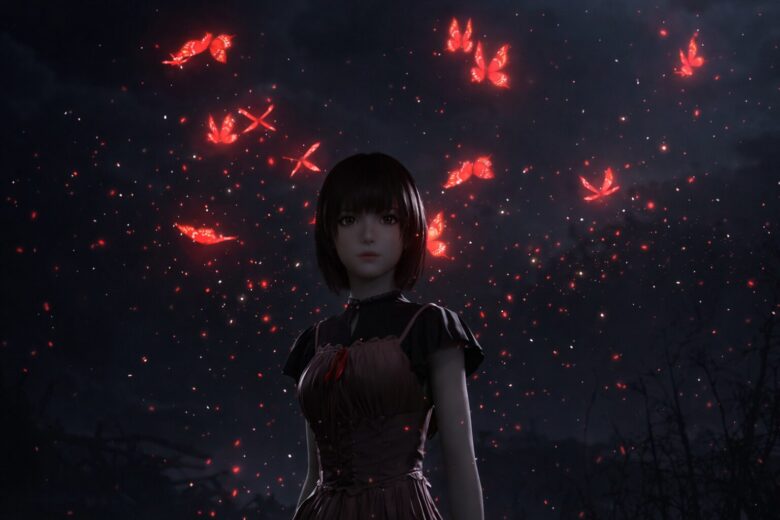
To Mayu, the world was something that existed because Mio was in it.
Mio was the point of reference itself—the one who defined where Mayu stood and even who she was.
— As long as I can be with Mio, that is enough.
That alone should have been enough to hold Mayu’s world together.
However, even while Mio remained beside her, Mio kept moving little by little ahead—toward a place Mayu could not reach.
- No matter how hard Mayu chased her, she could not reach her.
- They were supposed to be in the same place, yet Mayu could not stand beside her.
That dissonance continued to build inside Mayu as an unease she could not put into words.
In a world without Mio, Mayu would not know where she was.
Even her sense of who she was would begin to blur.
— A world without Mio has no meaning.
- Yet Mio keeps moving forward. She keeps slipping away.
The Shadow Festival had already forced Mayu to confront this feeling as reality.
Mio was someone who could disappear.
Mayu’s indescribable fear became decisive just before she fell from the cliff.
To Mayu, Mio’s casual words—“I’m gonna leave you behind!”—did not sound like a joke.
They sounded like confirmation of a future in which Mio would truly disappear from her life.
— This loss will repeat itself.
Once Mayu sensed that future, separation from Mio became unavoidable in her mind.
This reading suggests that Mayu may have deliberately let herself fall.
- Rather than keep living only to grow farther apart from Mio, she may have wanted to stop that future altogether.
Her fall can be understood as an impulsive act narrowed to one desperate purpose: to stop any further separation.
What Mayu did not expect was that she would survive—and that her right leg would be permanently damaged.
Mayu had wished for an end to further separation. She had not imagined having to continue living with a broken body.
When she looked at her injured right leg, she may have felt relief: “With this, I can keep Mio from leaving.”
At the same time, she had to face the sorrowful certainty that a future separation could never truly be avoided.
— Mio will not leave me, but we can never return to what we were before.
At the bottom of the cliff, Mayu held her broken leg and laughed through her tears.
In that expression, relief and despair existed at the same time.
Mio’s Perspective: An Interpretation
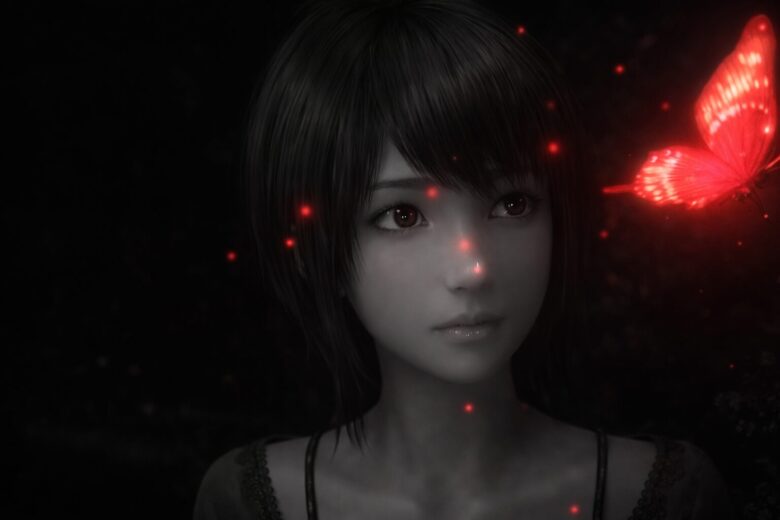
For Mio, Mayu’s fall was an event that happened in an instant.
- She let go of Mayu’s hand.
- She teased her lightly.
- She ran a little ahead.
Then, Mayu fell.
— It happened too suddenly for Mio to find any intention behind it.
Because of this, Mio could only understand it as:
“Mayu fell because of me.”
She does not reach the fear or impulse hidden inside Mayu. Instead, she understands everything as the result of her own actions.
This is not understanding.
It is simply taking responsibility.
If Mio were to understand that:
- Mayu may have deliberately let herself fall.
- Mayu may have wanted to end everything because she could no longer endure it.
—then the relationship Mio had always believed in would no longer be able to hold.
For Mio, the days she spent with Mayu were irreplaceable.
The time they had shared, the promises they had made—Mio had built all of it up as something certain, something she had never thought to doubt.
That is why, if she had to face the thought:
“We were together all that time. We promised we would always be together… and yet I did not understand anything at all.”
the entire relationship she had built with Mayu would begin to tremble at its foundation.
For Mio, this would be far too painful a reality to bear.
- It would feel as though her own past had been denied.
- It would mean confronting the pain of realizing that the time they shared may have been one-sided, without true understanding.
— It would be unbearable.
Because of this, Mio does not step into Mayu’s inner world.
Instead, she reduces everything to “It was my fault”, trying to preserve the relationship they had known without allowing it to collapse.
What Mio wanted to protect was:
- the relationship they had built
- the time they had spent together
- the belief that they understood each other
What she wanted to preserve was not Mayu herself, but the image of “the Mio who should understand Mayu” and “the two of them who should understand each other.”
How Mio and Mayu’s Relationship Changed
From here, the discussion becomes a little more structural.
Mio
A state in which the two were fused together
↓
The separation at the Shadow Festival
(which Mio barely remembers)
↓
The cliff accident
(Mayu’s fall)
↓
The belief takes shape: “My actions caused this.”
↓
She reduces the chain of cause and effect to a simple accident.
↓
A powerful sense of guilt emerges.
↓
A sense of responsibility takes shape:
“I have to protect Mayu.”
↓
She tries to preserve their relationship by protecting Mayu.
↓
She does not step into Mayu’s inner world.
Her attempt to understand stops there.
↓
She internalizes the role of the protector.
↓
She preserves the belief that they understand each other.
↓
She becomes fixed in this role without recognizing that their equality has already collapsed.
↓
She grows up continuing to protect Mayu, still holding on to the premise that
“I should be able to understand Mayu.”
Mayu
A state in which the two were fused together
↓
The separation at the Shadow Festival
↓
The fear takes root that “Mio can disappear.”
↓
Mio’s words at the cliff:
“I’m gonna leave you behind!”
↓
The memory of separation is reawakened.
↓
“I can’t bear this anymore.”
↓
An impulsive act
(the fall)
↓
An injury to her leg
(a body that cannot move freely)
↓
A realization settles in:
“Now Mio cannot leave me.”
↓
She comes to see being protected by Mio as a way of keeping Mio from leaving.
↓
She internalizes the role of the one being protected.
↓
The loss of an equal relationship.
↓
She grows up still carrying the thought:
“If separation is inevitable, I do not need anything beyond it.”
_
_
- Mayu understands that they can no longer return to the past when they were fused together.
- Mio continues to hold on to the belief that she should still be able to understand Mayu.
What Being Protected Means to Mayu
After the cliff accident, Mio began to care for and protect Mayu with unwavering devotion.
Mayu came to feel that Mio could no longer leave her of her own will.
- As long as Mio continues to protect her, Mayu can believe that Mio will not leave her behind.
However, this also meant that the moment she was no longer protected, she would lose Mio.
For that reason, Mayu became fixed in a state in which she could only remain the one being protected.
— If we are going to be separated, I do not need anything beyond that.
Once this structure had taken shape, an equal relationship—or the possibility that each of them could move forward separately—ceased to exist as a real option for Mayu.
What Protecting Means to Mio
After the cliff accident, Mio began to care for and protect Mayu with unwavering devotion.
At the root of this was a powerful sense of guilt:
“Because of me, Mayu can no longer run properly.”
For Mio, protecting Mayu meant continuing to take responsibility for a past mistake.
- As long as she protects Mayu, she can keep that event contained as an “accident.”
Conversely, the moment she stops protecting Mayu, the belief that “we are supposed to understand each other” begins to collapse.
For that reason, Mio became fixed in a state in which she could only remain the protector.
— If it is going to collapse, I do not need to see the truth.
Once this structure had taken shape, an equal relationship—or the possibility that each of them could move forward separately—was quietly excluded before it could even arise as a question.
What the Names “Mio” and “Mayu” Reveal
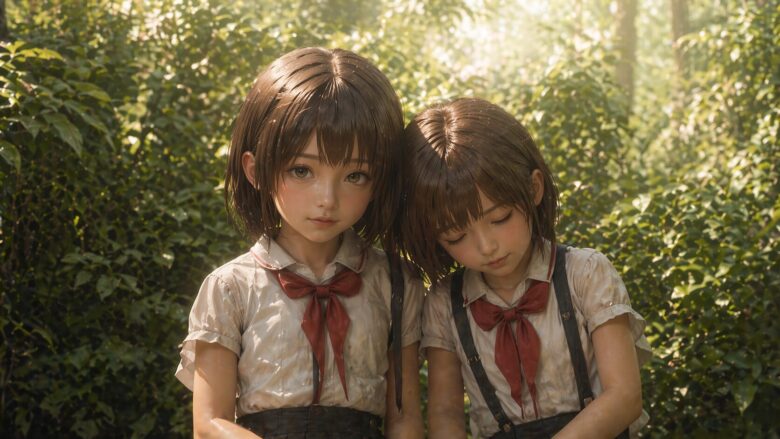
For English-language readers, one important point needs to be explained here.
In Japanese, the meanings and visual structure of the twins’ names add another layer to their relationship.
Mayu is written as 繭, the Japanese word for a cocoon.
When Japanese readers see this character, the first image it evokes is a closed form before it becomes a butterfly.
A cocoon is something that has not yet emerged into the outside world.
It remains enclosed within itself, waiting for the moment when it must change.
But this also means that, once it emerges, it can no longer remain as it was.
Mayu fears being separated from Mio, and chooses instead to close herself further inward.
If the essence of the name Mayu is “the form before becoming a butterfly” and “remaining enclosed within,” then the name fits her almost too perfectly.
When read alongside the original Japanese title Zero: Crimson Butterfly—and endings such as Crimson Butterfly, Frozen Butterfly, Black Flame Butterfly, and Sprouting Wings—Mayu can seem as though she was fated from the beginning to become a butterfly.
By contrast, Mio is written as 澪.
In Japanese, mio means a navigable waterway: a narrow route through shallow water that allows a boat to move forward.
It is a path that shows where one should go.
Mio has always tried to lead Mayu onward.
She protects her, supports her, keeps her away from danger, and tries to guide her toward somewhere safer.
In that sense, Mio herself becomes a guiding path.

The character 澪 is formed from the water radical and 零 (rei, “zero”), the character used in the original Japanese title Zero: Crimson Butterfly.
The reading rei also evokes the homophonous word 霊, meaning “spirit” or “ghost”—and, in a more poetic register, “wraith.”
This does not prove an official naming intention.
However, it creates a striking visual link between Mio’s name, water, and the title of the series, while also adding a phonetic echo of the spirits that haunt its world.
There is another Japanese association hidden within Mio’s name.
The old word miotsukushi (澪標) refers to a channel marker: a stake placed in the water to show ships the safe route.
In Japanese poetry, miotsukushi also overlaps in sound with mi o tsukushi (身を尽くし), an expression meaning to devote or exhaust oneself completely.
English cannot reproduce that wordplay directly.
But its meaning matters here.
Mio opens a path toward the outside world for Mayu, while also devoting herself completely to her.
A channel marker. A guide. And someone who gives herself away in order to keep another person safe.
- Mayu (繭) is a name that closes inward.
- Mio (澪) is a name that opens a route outward.
- Mayu longs to return to the place where the two were once one.
- Mio tries to guide Mayu through reality, even as she gives herself to her.
Their difference may not have been created only after the cliff accident.
It may have been quietly inscribed in their names from the beginning.
That is why the worlds Mio and Mayu see gradually begin to drift apart.
The Different Worlds Mio and Mayu See
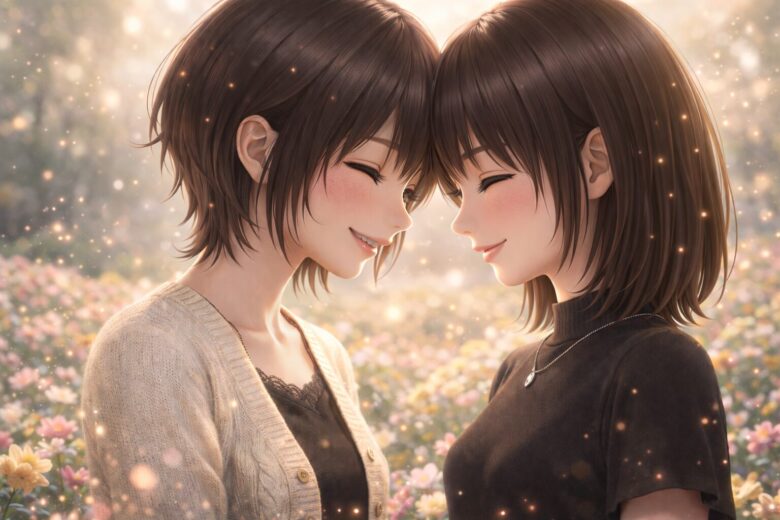
For Mio, the world is a reality she must understand and respond to in order to protect Mayu.
— She assesses the situation, avoids danger, and guides Mayu toward safety.
This is exactly what the player does while controlling Mio throughout the game.
By contrast, for Mayu, the world is an enclosed space that exists only through her relationship with Mio.
As long as Mio is there, Mayu’s world holds together. The moment Mio seems about to leave, its foundation begins to collapse.
Their difference is not merely a matter of personality or position. It appears as a difference in the very way each sister understands the world.
Mio
- She understands the world with reality as her point of reference.
(Within that reality, she tries to preserve her relationship with Mayu.) - An outward-facing world
_
Mayu
- She understands the world with her relationship with Mio as her point of reference.
(Mio’s presence is what allows the world to hold together.) - An inward, enclosed world
Mio wants to stay with Mayu in a real world that moves forward on the premise that they are separate people: “I am me, and you are you.”
Mayu wants to stay with Mio in an enclosed world that remains unchanged, built on the premise that they should never grow apart: “I am you, and you are me.”
Mayu rejects separation itself, while Mio acts within a reality where separation is always possible.
Because of this, even when they share the same event, they cannot make sense of it in the same way.
What “Together Forever” Means to Each Sister
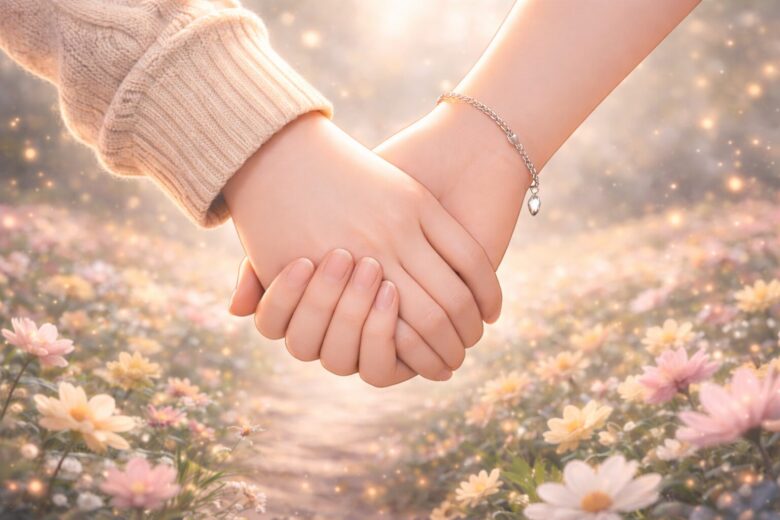
“Together forever. That’s our promise.”
It was a phrase the two sisters repeated to each other again and again.
Before and after the cliff accident, they continued to exchange the same words, and they remained deeply connected.
And yet—
the meaning each of them placed in those words gradually began to diverge.
For Mio, “Together Forever”
“We are separate people, and still, we choose to stay together.”
- They move through the same time while accepting that they are separate people.
- They allow each other to change, and still choose to remain side by side.
- They keep their relationship going so that neither of them is left behind.
- By continuing to protect Mayu, Mio tries to keep their relationship from breaking.
For Mayu, “Together Forever”
“I am you, and you are me—and we remain together without ever growing apart.”
- The relationship itself must not be allowed to change.
- They must remain the same.
- They must never be apart.
- They must remain as one.
_
_
_
_
- For Mayu, being together is the premise from the beginning: it must not change.
- For Mio, staying together requires continued effort: it must be maintained.
Mio and Mayu’s Relationship and the Branching Endings
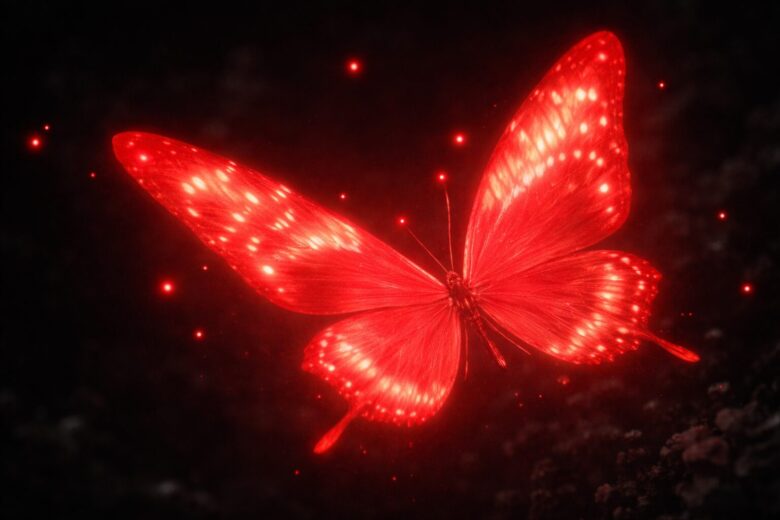
At least until they wandered into Minakami Village, Mio and Mayu were able to live together despite sensing this disconnect between them.
However, Minakami Village is a place that repeats the same tragedy again and again, confronting the twins with:
- isolation from the outside world
- the denial of separation
- the pressure to accept fusion
again and again.
It was more than enough of an environment to strengthen Mayu’s inward, enclosed world and distort Mio’s outward-facing world.
In each ending, the story branches depending on how this disconnect is handled.
- Accepting separation and moving forward (The Promise, Remaining Sun)
- Coming to a stop while preserving separation (Lonely Road Home, One Wing, The Abyss, Shadow Festival)
- Rejecting separation (Futagomori, Crimson Butterfly, Frozen Butterfly, Black Flame Butterfly, Sprouting Wings)
What is being questioned here is not the strength of their feelings.
Rather, it is how each ending responds to the different premises Mio and Mayu carry.
In other words, the endings branch according to their response to the structure itself.
Summary: The Different Worlds Mio and Mayu See
Although Mio and Mayu share the same experiences, they are divided by a fundamental difference.
- Mayu builds her world on the premise of her relationship with Mio.
- Mio begins from reality, and tries to preserve her relationship with Mayu within it.
This difference is not resolved with time.
Instead, it is strengthened by the structure of Minakami Village, until the two sisters finally reach a state where they can no longer truly overlap.
In the next article, I will examine Mio and Mayu’s emotions in the prequel novel The Forest Where the Promise Disappeared, included in the Premium Box materials.
I hope you will continue reading.
Fatal Frame II: Crimson Butterfly Analysis Hub
Fatal Frame II: Crimson Butterfly Analysis Series
Analysis Article #2: The Cliff Scene|Why Mio and Mayu See Different Worlds
Analysis Article #5: The Opening Scene|The Unfinished Words and Their Connection to the Endings
Analysis Article #6: Main Story Analysis|How Did Mio Change Throughout the Story?
Analysis Article #7: Crimson Butterfly Ending|Why Did Mio End Up Killing Mayu?
Analysis Article #8: Lonely Road Home / One Wing Endings|Explaining the Price Mio Had to Bear
Analysis Article #9: Frozen Butterfly Ending|Mayu’s Tearful Smile and the Head in the Hina Doll Room
Analysis Article #10: Shadow Festival Ending|Why Did Mio Say, “This Time, We Fall Together”?
Analysis Article #11: The Promise Ending|The Meaning of “I’ll Never Let You Go Again”
Analysis Article #14: Sprouting Wings + Remaining Sun Endings|What It Means for Mio and Mayu to Return Alive
*This article is part of the “Fatal Frame II: Crimson Butterfly Analysis” series.
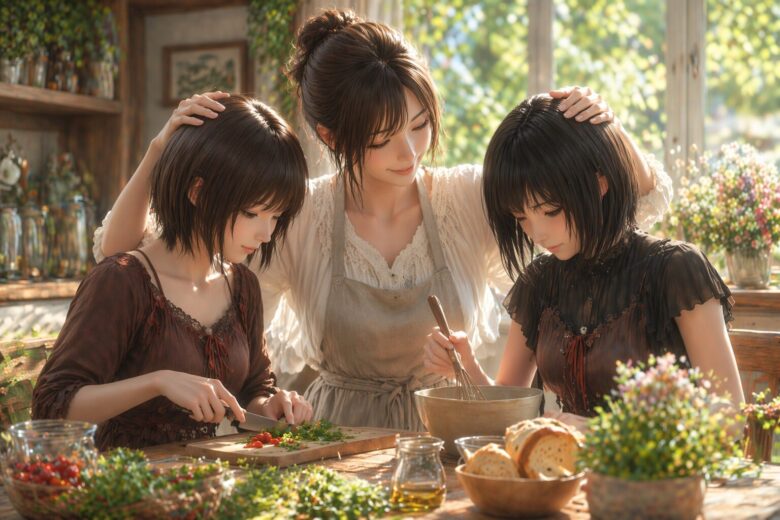
*The images used in this article include unofficial AI-generated images inspired by the world of the game, as well as screenshots from FATAL FRAME II: Crimson Butterfly REMAKE and Project Zero 2: Wii Edition. All rights to Fatal Frame II: Crimson Butterfly belong to Koei Tecmo Games.
*This article refers to certain official materials that are currently difficult to obtain. Their contents are summarized only where necessary for understanding the story, while the article itself focuses mainly on analysis and interpretation.
コメント欄