This article is part of my Fatal Frame II: Crimson Butterfly Analysis series, focusing on the promise of “Together forever” as seen through the theme songs.
Fatal Frame II: Crimson Butterfly has three theme songs: “Chou,” “Kurenai,” and “Utsushie.”
All three songs were written and composed by Tsuki Amano, and each seems to illuminate Mio and Mayu’s wish to remain “Together forever” from a slightly different angle.
For reference, the titles can be understood as follows:
- “Chou” means “Butterfly.”
- “Kurenai” means “Crimson.”
- “Utsushie” means “Reflected Image,” or “Reflection.”
The pain of being left behind becomes a voice calling out to be found.
The regret of letting go becomes a determination to reach out and grasp the other person this time.
And after learning the weight each of them has carried, the two finally move forward as separate people, still remaining beside each other.
In this article, I will read the three songs this way:
Chou is a song that calls.
Kurenai is a song that chases.
Utsushie is a song that walks side by side.
Using these three songs as a guide, I will trace how Mio and Mayu’s promise of “Together forever” changes throughout the story.
Please note that this article contains major spoilers for Fatal Frame II: Crimson Butterfly. If you want to review the main story first, I recommend starting with the Fatal Frame II: Crimson Butterfly main story overview before reading this analysis.
- Theme Song “Chou” | The Wish to Burn Myself into You
- “Deep Underground, I Kept Digging a Hole”
- “Scraping together patchwork happiness, and sowing it”
- “The inerasable scars left by the palms of my hands”
- “The eternity I dreamed while confined in my cocoon”
- “The morning will eventually come and bring the darkness back home, And steal my eyes away from me”
- “I want you to destroy me with your own hands”
- “See, I can flutter better than you thought”
- Summary of Theme Song “Chou”
- Theme Song “Kurenai” | The Regret of Wanting to Catch You
- “People gather to chant of what is right”
- “Walking to sacrifice yourself for me”
- “It’s my proof that you and I are together again, and always”
- “When we awake from this madness, I’ll take you to where the sun rises”
- “I wanted to catch up with you”
- “The burning sin, steeped in crimson”
- “I will live on as a single-winged butterfly”
- Summary of Theme Song “Kurenai”
- Theme Song “Utsushie” | A Song of Remaining Separate and Walking Side by Side
- “I wanted to go with you forever”
- “I am still alive in that season”
- “Let’s clear up our misunderstandings one by one and start over from the beginning”
- “You were like a light that made me shine”
- “Every time we try to confirm our feelings, we end up at cross-purposes”
- “Soar into the twilight”
- “Soar toward the rising sun”
- “Well, let’s go”
- Summary of Theme Song “Utsushie”
- The Three Songs Sing of the Three Stages of “Together Forever”
- How “Together Forever” Changes in Each Ending
- Summary: The Answer to “Together Forever” Reflected by the Three Theme Songs
Theme Song “Chou” | The Wish to Burn Myself into You
Chou is a song strongly colored by the pain of the one who was left behind.
- palm scars that cannot be erased
- an eternity dreamed inside a cocoon
- the wish to be found while trying to flutter
What echoes from these images is not simple sadness.
I want to carve my existence into you…
I want to return with you to the time when we were together…
I want to keep you from looking away from me…
That is the desperate feeling carried by this song.
“Deep Underground, I Kept Digging a Hole”
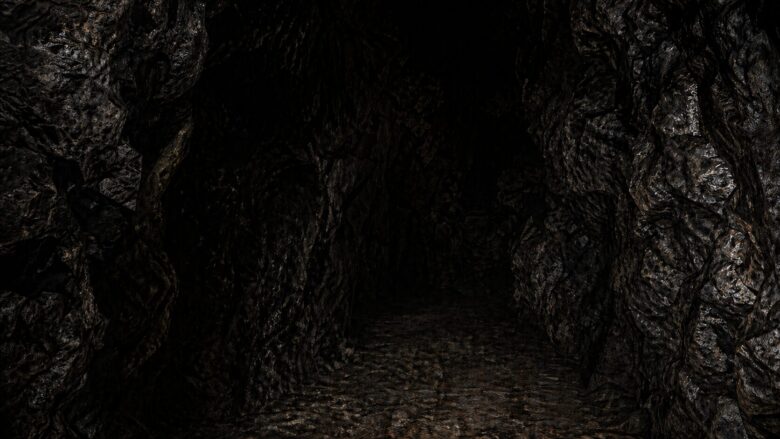
The opening of the song depicts the sensation of descending underground.
While digging through a dark hole without knowing where it leads, the speaker searches for the warmth of the person they love.
This image strongly overlaps with the feelings of Mayu and Sae.
- Mayu kept longing for the childhood when she and Mio had felt as though they were blended together.
- Sae kept waiting for Yae’s hands to touch her neck.
As they follow the Deep Path, Mayu and Sae are gradually drawn toward the Utsuro.
There,
they long for the person who had once been with them forever…
they try to return to the time before they were split in two…
This passage contains a wish to become one, almost like a return to the womb.
“Scraping together patchwork happiness, and sowing it”
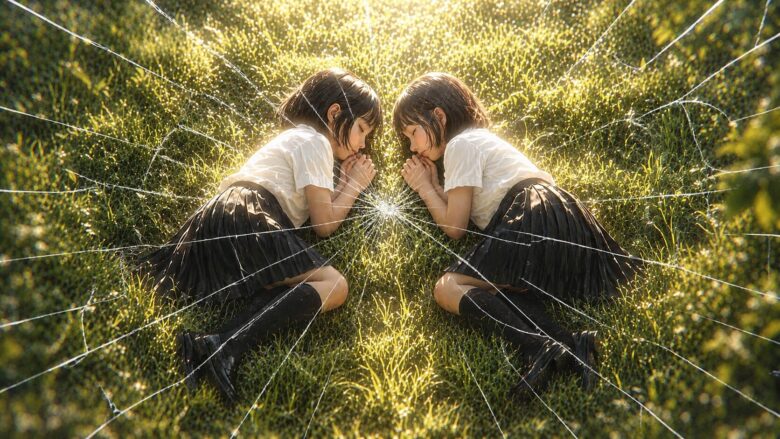
Early in the song, there is a sense of gathering broken pieces of happiness and trying to keep them alive.
The happiness described here is not something whole from the beginning.
It is something barely held together by connecting what has already been lost or damaged.
This is close to the relationship between Mio and Mayu.
After the accident in childhood, Mio began protecting Mayu, and Mayu began being protected by Mio.
At first glance, the two seemed to have become more strongly connected than before.
And yet, that relationship was built upon Mayu’s injured leg, Mio’s guilt, and the feelings neither of them had been able to say aloud.
Their “Together forever” had been a patchwork from the very beginning.
“The inerasable scars left by the palms of my hands”
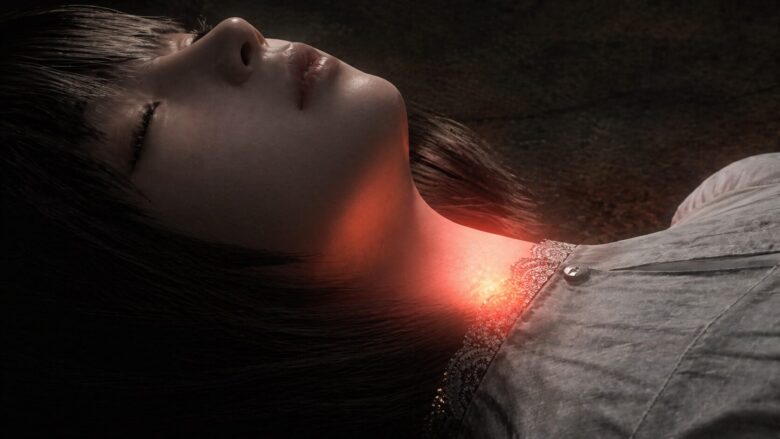
One of the images that echoes most strongly in the song is the mark left by the hand.
- the mark of letting go
- the mark of touching
- the mark of failing to grasp
And then—the mark left on the neck.
In the Crimson Butterfly Ending, the mark of Mio’s hands remains on Mayu’s neck, and from there, a crimson butterfly is born.
Afterward, a similar mark remains on Mio’s neck as a crimson bruise.
On the one who was touched…
On the one who touched…
The same shape is left behind.
The phrase “The inerasable scars left by the palms of my hands” is not only the memory of a gentle touch.
It is also proof of an attempt to become one.
The pain of being left behind…
The wish to be touched…
The longing to be brought to an end by that hand…
All of it has already become something that can no longer be peeled away.
“The eternity I dreamed while confined in my cocoon”
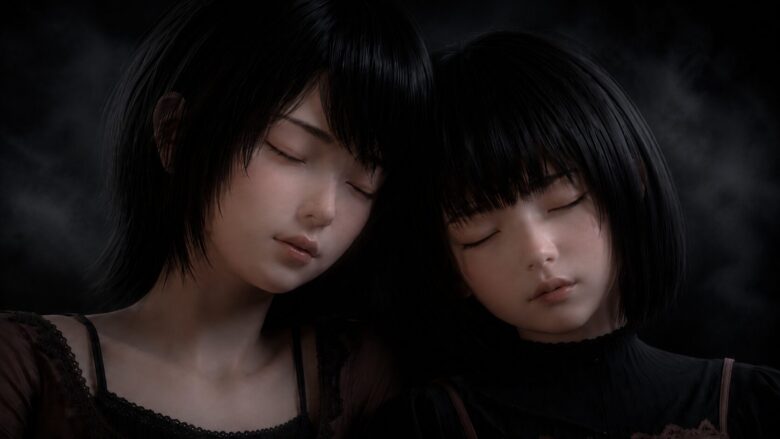
In the middle of the song, the lyrics depict an eternity drawn inside a cocoon.
Not opening outward.
Closing inward.
Cutting off the future where two people must live on as separate human beings in reality.
This sensation strongly overlaps with the Shadow Festival Ending, the Futagomori / Twin Enclosure Ending, and the Black Flame Butterfly Ending.
- In Shadow Festival, Mio and Mayu dream of an illusion and reach the end together.
- In Futagomori / Twin Enclosure, Mio and Mayu close themselves inside a world meant only for the two of them.
- In Black Flame Butterfly, the two who have closed inward sink into zero together with the world itself.
Inside that cocoon—inside Mayu’s world—they fulfill “Together forever.”
The eternity drawn inside a cocoon is a time that refuses life and remains forever stopped at the moment when they had once been one.
“The morning will eventually come and bring the darkness back home, And steal my eyes away from me”
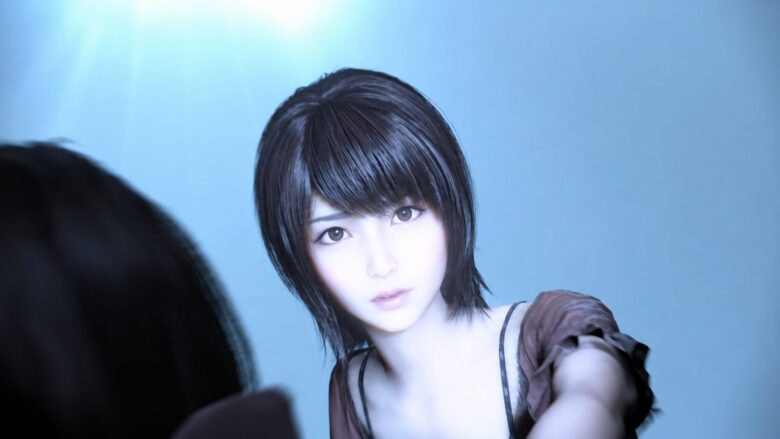
In the middle of the song, morning is depicted as something that steals away “my” gaze.
Normally, morning is the light that ends the darkness.
But for Mayu, morning means the time when Mio returns to the outside world.
As long as they sleep side by side in the night, Mayu can dream of “Together forever.”
But when morning comes, reality pulls them back apart.
The sunlight that enters the room becomes something almost like darkness, because it takes away the person she loves most.
Even though morning light should be shining in,
it is no longer possible to see it.
This sensation recalls Mio in The Abyss Ending.
Mio grasps Mayu’s hand as Mayu falls into the Utsuro, and this time she does not let go.
But in exchange, she looks into the forbidden bottom of the Utsuro and loses her sight.
The morning that follows is not an ordinary dawn.
- Even if Mayu is beside her, Mio can no longer know for certain whether she is truly Mayu.
- Even after leaving the village, Mio remains trapped by what she saw at the bottom of the Utsuro.
- Even after returning to a world with light, Mio can no longer confirm anything with her own eyes.
Because Mio tried to return toward the light, her eyes were taken away.
“I want you to destroy me with your own hands”
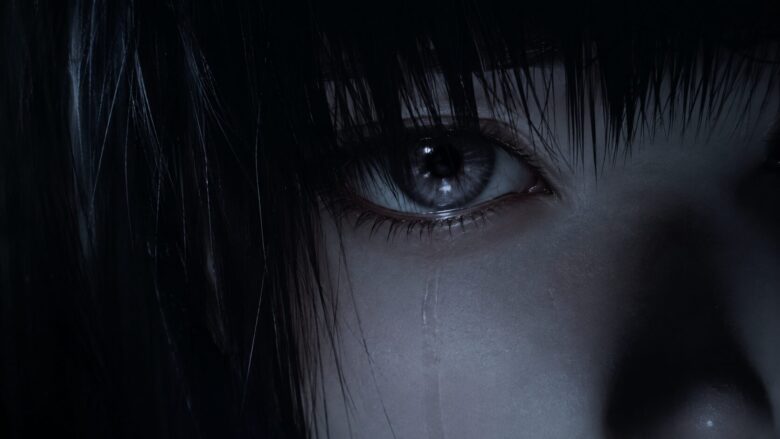
Toward the end of the song, there is a wish to be broken while the self can still remain the self.
This overlaps deeply with Mayu in the Crimson Butterfly Ending and Mayu in the Frozen Butterfly Ending.
- In Crimson Butterfly, Mayu finally becomes one with Mio by ending through Mio’s hands.
- In Frozen Butterfly, Mio refuses that wish, and Mayu’s love and hatred freeze in place.
Mayu, who wishes to be broken, was probably not simply seeking death itself.
What she wanted was for Mio to feel the pain inside her.
Words could not reach.
Living on could not make Mio understand.
So if there was no other way,
Mayu wanted that pain to reach Mio even through an ending.
That is the extreme wish contained in this part of the song.
“See, I can flutter better than you thought”
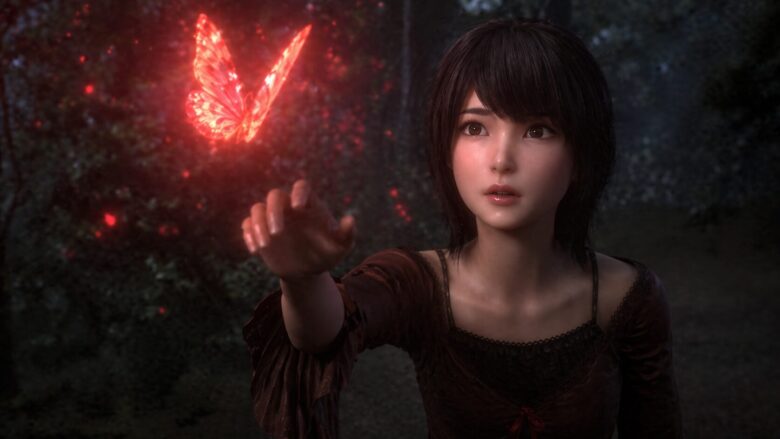
The line repeated at the end of the song is “See, I can flutter better than you thought.”
- anger at being separated, even though they should have been one
- the wish to reach the other person, even if it means being destroyed by their hands
- an obsession with wanting the other person to notice the self that has changed
What fills this line is the fierce emotion of wanting to burn oneself into the other person.
Tsuki Amano has also described Chou as carrying an anger that goes beyond separation: the feeling that they should have been a perfectly symmetrical pair.
With that in mind, Chou is not simply a song of loss.
You and I were supposed to be a matching pair…
So why are you the only one moving away from me…?
Even if I am no longer the person I used to be…
I still want your eyes to reflect only me…
That voice seems to echo from the depths of Mayu,
and from Sae’s stopped time.
Summary of Theme Song “Chou”
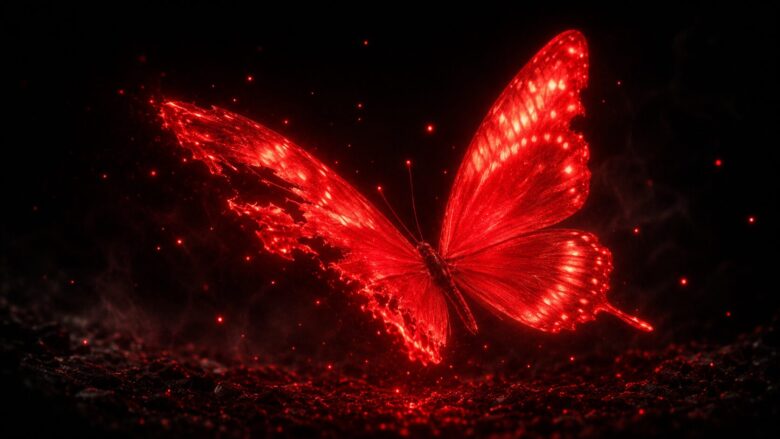
Chou is a voice heard from inside the cocoon—
from inside Mayu’s world,
before the wings could sprout.
Feelings that could not reach while still in human form…
Pain that words could not convey…
The desperate wish to leave oneself inside the other person…
All of it becomes a butterfly burned crimson,
trying to rise into flight.
Theme Song “Kurenai” | The Regret of Wanting to Catch You
Kurenai is a sister song that forms a pair with Chou.
If Chou is a voice saying, “I want you to find me,” then Kurenai is a voice saying, “I wanted to catch you.”
Tsuki Amano has explained it this way:
Chou is from the perspective of the one who keeps flying awkwardly with torn wings.
Kurenai is from the perspective of the one left with a torn-away wing, unable to fly.
I wanted to take you away…
I wanted to catch up to you…
And yet,
my hand could not reach you…
That pain begins to overlap with the regret carried by Mio and Yae.
“People gather to chant of what is right”
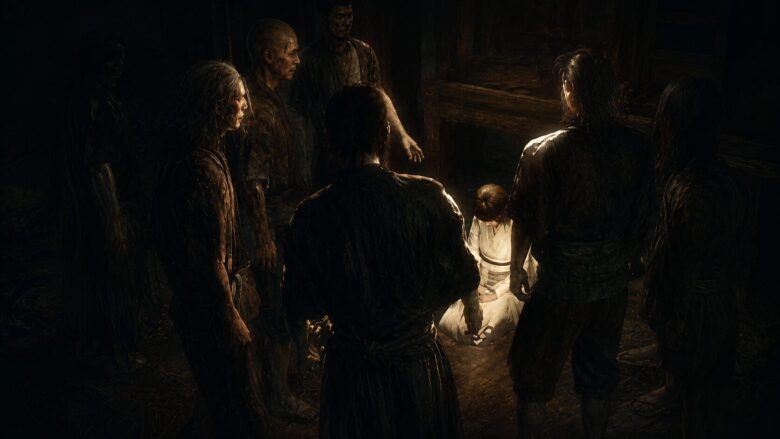
In the opening part of the song, the atmosphere of Minakami Village itself begins to overlap with the lyrics.
- to protect the law
- to calm the Utsuro
- to keep the village alive
Anything that strayed from the “rightness” of the Crimson Sacrifice Ritual was cut away.
The villagers were not necessarily acting out of malice.
And yet, the rightness that had accumulated inside the village trampled over Yae and Sae’s promise to stay “Together forever.”
They tried to run away together…
But the village would not allow it…
As a result, Sae was captured, and Yae was left behind…
That helplessness and heaviness had sunk into the opening of the song.
“Walking to sacrifice yourself for me”
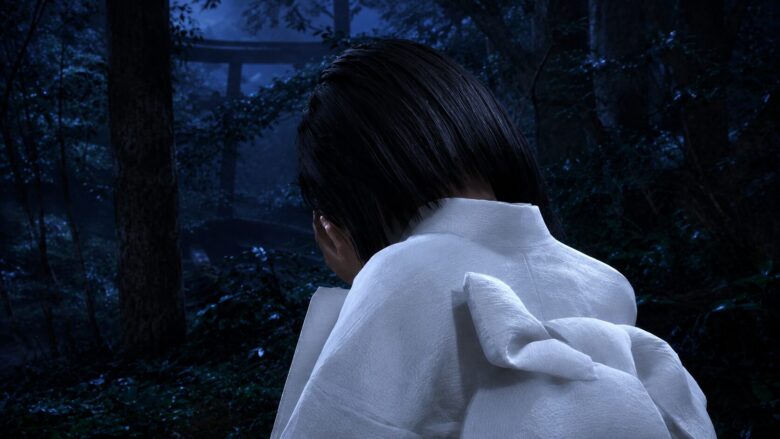
In the early part of the song, there is a sense that the person one loves disappears into the darkness and becomes a sacrifice in one’s place.
For Yae, Sae was the other half she lost because of herself.
The two of them should have lived together…
And yet, only Sae was made to die…
This feeling also overlaps with Mio after the Crimson Butterfly Ending.
Mio survives, while Mayu becomes a crimson butterfly and returns to the sky…
For the village, this was fulfillment.
But from Mio’s point of view, it was the loss of being unable to bring Mayu back.
Sae went to the place Yae could not return to…
Mayu went to the place Mio could not follow…
Losing the person most precious to them, and remaining alone on this side…
This passage marks the beginning of the guilt carved into the one who let go of the other’s hand.
“It’s my proof that you and I are together again, and always”
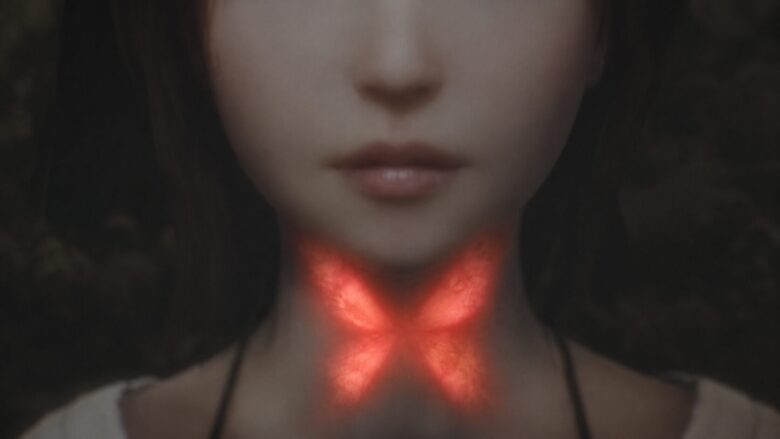
In the chorus of the song, the image of proof binding two people into one strongly echoes.
Not a beautiful form of becoming one,
but a distorted form of becoming one.
- the crimson bruise in the Crimson Butterfly Ending
- Mio’s neck in the Frozen Butterfly Ending
- the wound on the right leg in the One Wing Ending
All of these are traces left behind by the other half who was lost.
The person they loved is no longer beside them.
Even so, that person continues to remain—
as a mark,
as tears,
as pain.
The remnants that bound them together were not the shape of fulfilled love.
They were what remained of “Together forever,” a promise that never came undone until the very end.
“When we awake from this madness, I’ll take you to where the sun rises”
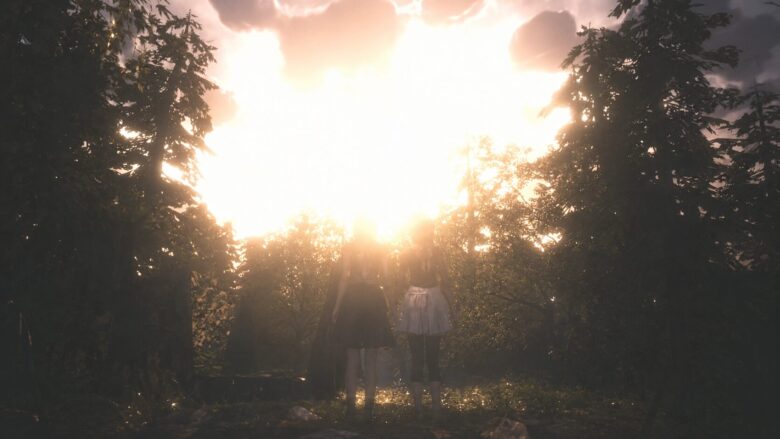
In the middle of the song, a wish appears: the wish to take the person one loves to a place where the light shines.
I wanted to show you the outside world…
I wanted to walk with you beneath the sun…
But my hand could not reach you…
Beyond that regret lies the place where the sun rises.
It is not a place to escape to alone.
It is not a place to go while leaving the person you love behind.
It is the place they wanted to reach this time, hand in hand.
The wish carried by Yae and Mio—
to rescue the one they loved from the darkness and take them to a brighter place—
finally begins to take on light in The Promise Ending and the Sprouting Wings Ending.
“I wanted to catch up with you”
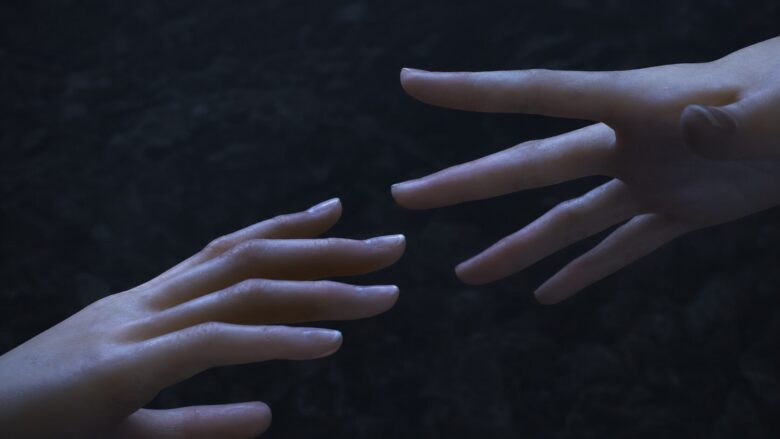
At the center of this song is the regret of wanting to catch up, wanting to hold on.
As a child, Mio could not take Mayu’s hand.
If only I had not let go of her hand then…
If only I had not run ahead then…
If only I had not looked away from Mayu then…
That regret remained inside Mio all along.
And in the Lonely Road Home Ending, that regret is carved even deeper.
Even though Mio should have escaped the village, she cannot escape Mayu’s voice.
Even though she survived, she cannot become free.
- the hand she could not catch becomes a punishment that blames her
- the hand she could not grasp becomes an ache that never disappears
- the other half she could not take with her remains forever inside her chest
The punishment and the ache eventually begin to smolder deep inside Mio’s heart as a crimson sin.
“The burning sin, steeped in crimson”
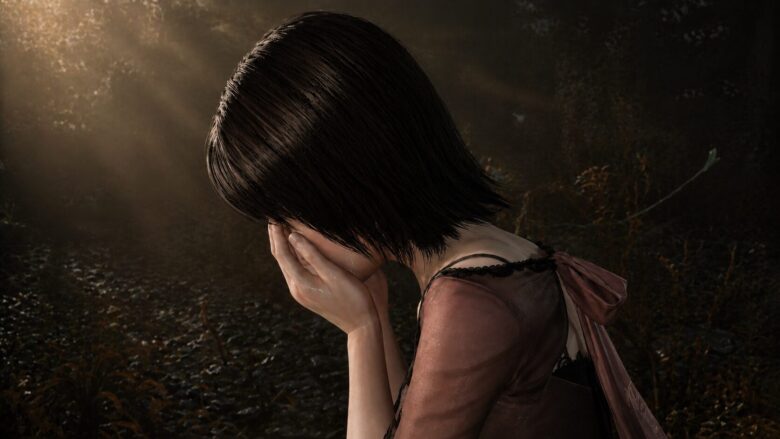
In the later part of the song, there is a sense of a sin that keeps smoldering red, and a wound that one still wants to carry.
After the Crimson Butterfly Ending, Mio continues to think about Mayu.
She hears Mayu’s voice.
She carries the trace left behind.
She continues living with the memory of having ended Mayu with her own hands.
This was not simply punishment.
Because Mayu was precious, Mio did not want her to disappear.
Because Mio loved Mayu, she wanted to keep feeling what remained.
It was the weight of losing someone and still being unable to let go.
The same is true for Mio in the Lonely Road Home Ending and the One Wing Ending.
Mio left Mayu behind.
That truth continues to smolder inside Mio.
It is not that she wants to forget but cannot; rather, Mio cannot allow herself to forget.
This crimson sin was a wound meant to keep the most precious person alive inside her.
“I will live on as a single-winged butterfly”
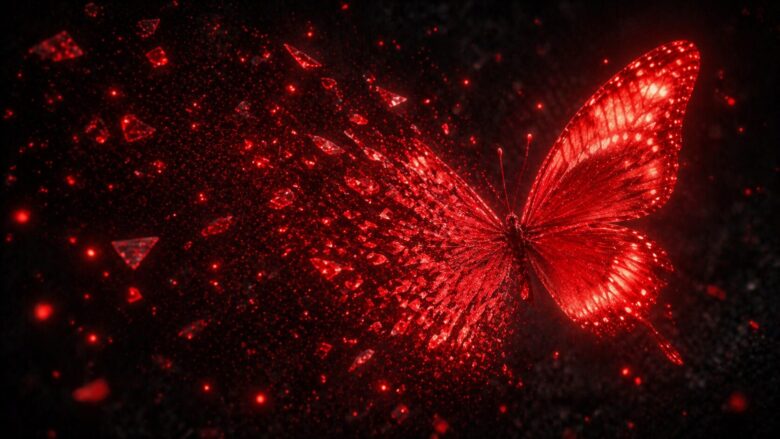
At the end of the song, what is depicted is the feeling of continuing to live as a butterfly that can no longer fly.
The single-winged butterfly is the butterfly left behind—
the one who could not answer the voice that said, “Find me.”
I couldn’t catch up…
I couldn’t bring you out…
I couldn’t walk at the same pace…
- In Crimson Butterfly, Mio cannot grasp Mayu as Mayu flutters away.
- In One Wing, Mio drags her right leg, like a butterfly whose wing has been torn away.
- In Frozen Butterfly, Mio is enclosed within Mayu’s hands, no longer allowed to fly.
- In The Abyss, Mio loses her sight and can no longer spread her wings freely.
Mio carries a wound that will not disappear.
It cannot be called salvation.
Even so—
she has no choice but to keep walking from here on.
Summary of Theme Song “Kurenai”
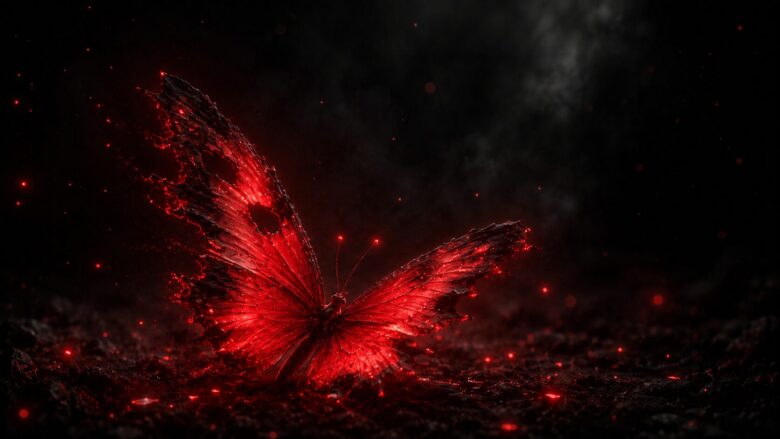
Kurenai was a song heard from outside the cocoon—
from outside Mayu’s closed world,
before the wings could sprout.
A hand reaches toward the voice calling from within.
But that hand does not reach.
What remains is:
the sensation of a hand that could not grasp…
the regret of failing to arrive in time…
the lingering echo of the other half she could not protect…
All of it becomes a single-winged butterfly,
living on with a crimson sin still smoldering deep within.
Theme Song “Utsushie” | A Song of Remaining Separate and Walking Side by Side
Chou is a song that calls from within, saying, “I want you to find me.”
Kurenai is a song that chases from outside, saying, “I wanted to catch you.”
After passing through those two songs, Utsushie sounds like a song in which the two finally face each other, reflect one another, and take one more step forward.
- the remorse of having left someone behind
- the resignation of having been left behind
- the regret of having let go of the other person’s hand
- the sadness of having been split in two
While carrying all of it,
the two begin searching for a way to walk at the same pace.
“I wanted to go with you forever”

At the beginning of the song, what appears is the wish to go anywhere, side by side with the person one loves.
What matters here is not chasing after someone.
It is not moving ahead of someone.
It is the sense of distance contained in being side by side.
Mio and Mayu had never truly reached this distance before.
- Mio tried to protect Mayu without truly understanding her, and kept walking ahead.
- Mayu feared that Mio would leave her, and kept chasing after Mio’s retreating back.
The one who protects and the one who is protected…
The one who moves forward and the one left behind…
The one who leaves and the one who is left…
Their pace had always been just slightly out of step.
I did not want to leave Mayu behind…
I did not want to cling to Mio either…
What I truly wanted was to walk at the same speed…
That wish finally takes shape in the Remaining Sun Ending.
“I am still alive in that season”
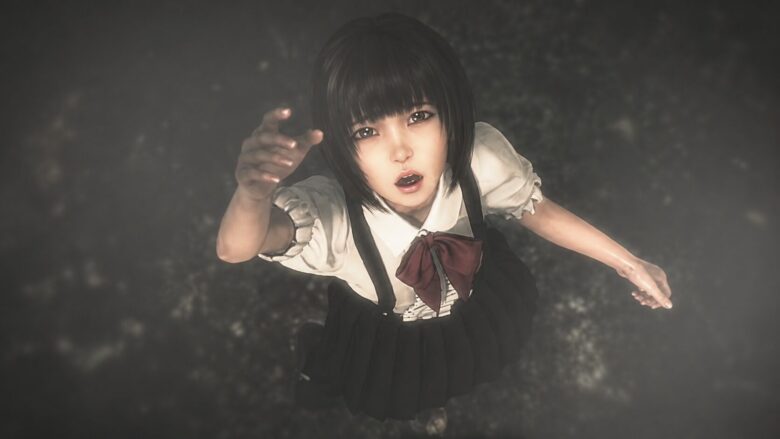
In the opening part of the song, the pain of being unable to catch up and the season when they drifted apart are depicted.
- the time when they should have been in the same place, yet could not see the same future
- the time when one reached out but could not catch up, leaving only one of them behind
- the time that continued to bind the two after they let go of each other’s hands
That season was not simply a nostalgic memory.
It was the memory of a pain the two had never been able to touch.
The cliff accident was an event of the past.
And yet, neither of them had truly moved forward from it.
- Mio carries the regret of letting go of Mayu’s hand that day.
- Mayu carries the despair of being left behind that day.
The line “I am still alive in that season.” seems to express exactly this kind of stagnation.
Time has moved forward.
But the heart remains in that season.
This feeling faintly overlaps with the Shadow Festival Ending.
The fear of being separated on the day of the festival…
The despair of falling alone…
The hope that was rewound only in the final moment…
The two who touched that season ended up remaining closed inside it.
In the Sprouting Wings Ending, however, it was different.
Mio did not merely reach out from the outside.
She descended herself to the depth where Mayu had sunk.
There, the two were able to return just once to the time when they had been one.
The pain that had remained in that season changed from something that separated them into a memory that allowed them to stay beside each other.
And from there, it opened outward.
“Let’s clear up our misunderstandings one by one and start over from the beginning”
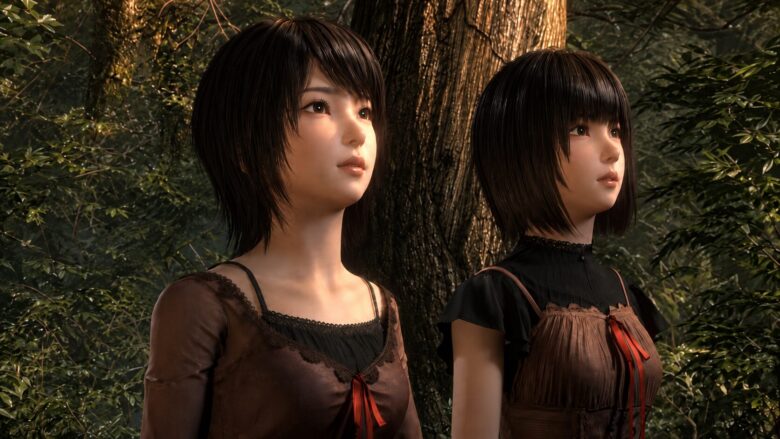
In the middle of the song, there is a sense of undoing what had been mismatched, one by one, and returning once more to the beginning.
Mio and Mayu had promised “Together forever.”
However, the meaning contained within that promise had become misaligned.
In The Promise Ending, Mio touches that misalignment for the first time.
“We might not ever be able to become one, but…
I’ll never let you go again.”
This declaration was not the perfect answer Mayu had been longing for.
Even so, after acknowledging that they were separate people, the two remade their promise once more.
In the Sprouting Wings Ending, that remaking of the promise becomes even deeper.
Mio truly feels Mayu’s pain.
Mayu learns that Mio had needed her too.
And only then do the two finally overlap as one.
To “clear up our misunderstandings one by one and start over from the beginning” means this:
to learn where the two of them had passed each other by,
to touch the scenery each of them had been seeing,
to return to the time when they had once been one,
and then to come back from that nostalgic place in separate bodies.
“You were like a light that made me shine”
In the middle of the song, the person most precious to them is portrayed as a light that illuminates them.
Because Mio is there, Mayu can understand her own shape.
Because Mio shines on her, Mayu can see where she is standing.
For Mayu, Mio was exactly that kind of existence.
That is why Mayu could say that “A world without Mio has no meaning.”
What lies here is the feeling that if Mayu lost Mio, she would lose sight of even her own outline.
However, the Sprouting Wings Ending reveals that this relationship was not one-sided.
Mio needed Mayu too.
Because Mayu was there, Mio could want to live.
Because Mayu was there, Mio could believe the world was beautiful.
Just as Mio had been a light for Mayu,
Mayu was also a light that reflected Mio’s own outline back to her.
Mio is not Mayu.
Mayu is not Mio.
They cannot become the same existence.
And yet, they can still illuminate each other.
Like an utsushie,
they can overlap pain and prayer without becoming one.
In the light of dawn, the relationship between the two quietly begins to be untied and rewoven.
“Every time we try to confirm our feelings, we end up at cross-purposes”
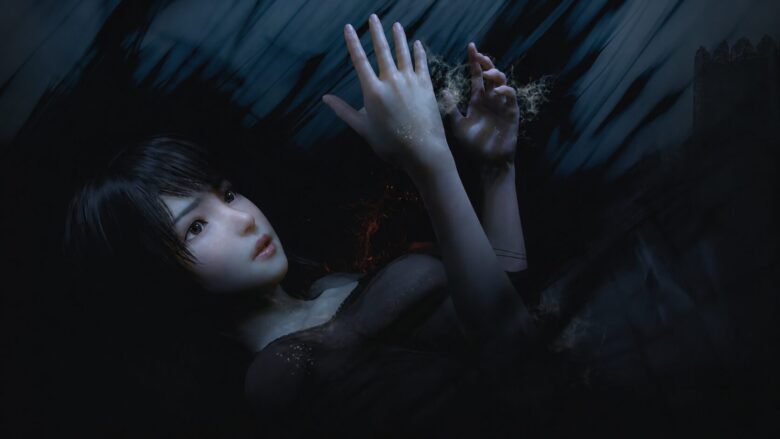
In the song, there is also a sense that each time the two try to confirm what lies in each other’s hearts, they instead become unstable.
This does not mean that their feelings turn into lies.
It means that the moment their precious feelings come too close, they begin to change into something else.
- In Frozen Butterfly, Mayu’s love turns into possession.
- In The Abyss, what seemed like salvation reverses into dependence.
- In Futagomori / Twin Enclosure, the promise of “Together forever” becomes a signal to close themselves away.
Love becomes possession…
Salvation becomes dependence…
The promise becomes confinement…
Drawing closer does not always mean being saved.
If they become one, they will not have to lose each other.
But in exchange, they will no longer be able to stand as separate people.
If they remain apart, their boundaries will be protected.
But in exchange, the guilt of leaving and the resignation of being left behind will remain.
Mio and Mayu’s relationship had become cross-purposed again and again.
The closer they drew, the deeper they sank.
The more they tried to save each other, the more tightly they became entangled.
Within that dangerous balance, their “Together forever” slowly changed—
from a promise for sinking together,
into a promise for standing beside each other.
“Soar into the twilight”
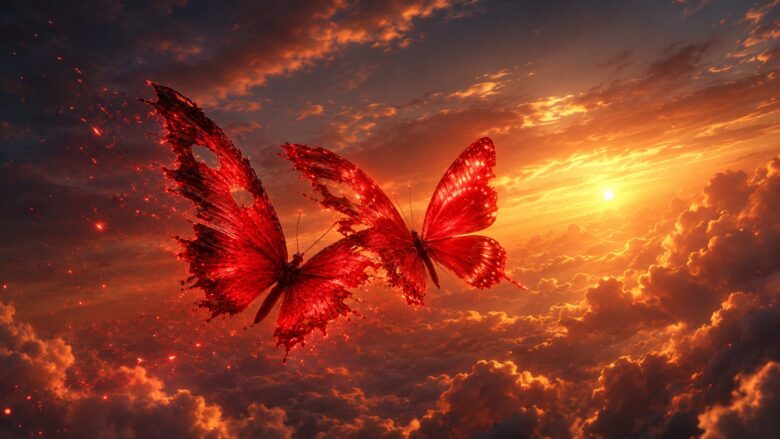
In the later part of the song, there is an image of flying toward the twilight.
Twilight is the seam where day and night overlap.
The remaining sun.
A sky that has not yet become night.
The brief moment when the edge of the world burns crimson.
A moment when everything becomes vague.
Even so, without throwing away their wounds, memories, or feelings, they keep flying.
they keep flying.
To “Soar into the twilight” likely means to hold what has ended once more within a faint light, without forgetting it.
“Soar toward the rising sun”
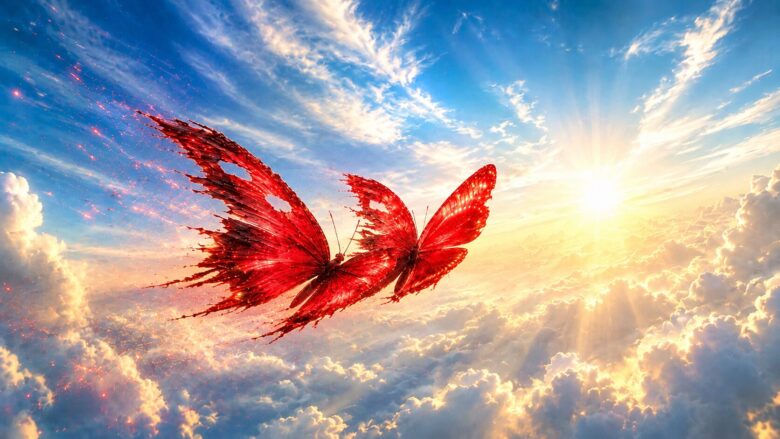
Near the end of the song, amid a rain that never seems to stop, the destination of the wings changes toward the rising sun.
Perhaps the promise they tied together cannot remain in the form of eternity.
Perhaps love and dreams cannot be kept forever in the same shape.
And yet, the more they understand how fragile those things are, the more they want to hold them carefully.
Turning pain into a memory for understanding each other.
Keeping what was lost deep inside their hearts, so it will not spill away.
The two try to move from the light of an ending toward the light of a beginning.
What exists in this flight is the weight of opening outward, even while carrying wounds.
From twilight to sunrise.
The sound of wings crossing that in-between continues to echo forever.
“Well, let’s go”
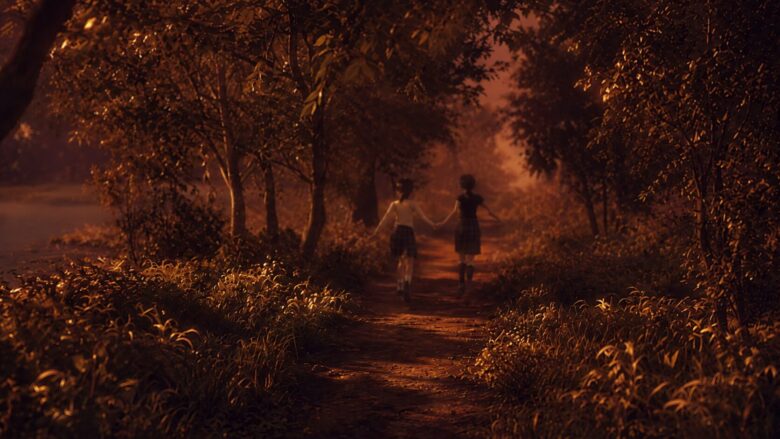
At the end of the song, what is placed there is a call to go together.
In the Remaining Sun Ending, Mayu reaches her hand out to Mio.
Mio takes that hand.
Mayu begins to run, and Mio runs beside her.
There is no one leaving,
and no one being left behind.
They are not chasing.
They are not dragging each other along.
They are not closing each other away.
“Well, let’s go” was not a signal for becoming one.
It was a phrase for moving forward with their hands joined, on their own separate feet.
With that step, the two were finally able to stand side by side.
Summary of Theme Song “Utsushie”
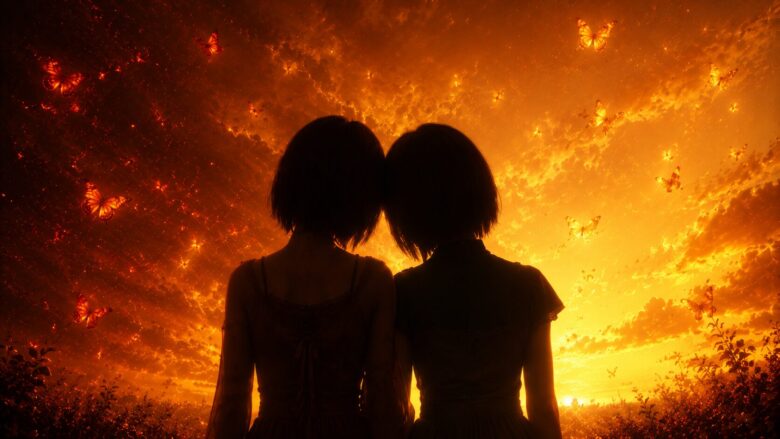
In Utsushie, the one who calls and the one who chases finally stand beside each other.
By reflecting each other, they come to know their differences.
Because they are different, they can choose once again to remain beside each other.
They are not one.
And yet, they are not apart.
Holding hands,
the two continue walking along that boundary.
The Three Songs Sing of the Three Stages of “Together Forever”
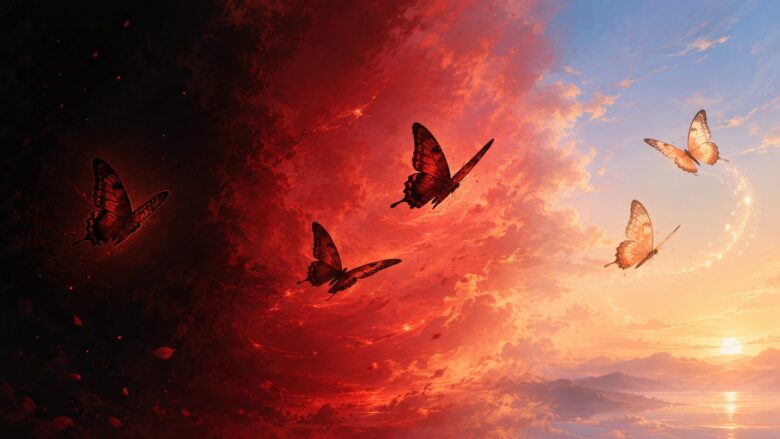
Chou, Kurenai, and Utsushie each portrayed Mio and Mayu’s “Together forever” from a different place.
Chou is a song that calls from within.
The one who was left behind continues searching for the other person from a dark place.
- I want you to break me.
- I want you to understand my pain.
- I want you to find me after I have become a butterfly.
Here, “Together forever” was a wish to return to being one.
If living on as separate people was all that awaited them,
then even if it meant ending,
they wanted to remain inside the other person.
That wish seeped into Crimson Butterfly, Frozen Butterfly, Futagomori / Twin Enclosure, and Black Flame Butterfly.
Kurenai is a song that chases from outside.
The one who let go reaches toward the person their hand could not reach.
- I wanted to catch up.
- I wanted to hold on.
- I wanted to bring you out.
Here, “Together forever” remained as a promise that could not be reclaimed.
What has been lost does not return to one’s hand—
and that regret echoes through Lonely Road Home, One Wing, Shadow Festival, and The Abyss.
Utsushie is a song that stands side by side at the boundary between inside and outside.
The one who calls and the one who chases finally face each other.
- knowing they are not the same
- illuminating each other
- turning the memory of once being one into a light for stepping forward
Here, “Together forever” became words for staying beside each other while remaining separate.
Even if they cannot return to being one,
they still reflect the wish not to be separated as they move toward dawn.
That form of the vow appears in The Promise, Sprouting Wings, and Remaining Sun.
The “Together forever” that burned so fiercely it moved toward destruction in Chou.
The “Together forever” that smoldered in the chest as a sin that could never be undone in Kurenai.
The “Together forever” that opened in Utsushie, not as words for enclosing the other person, but as words for walking beside them.
A song that calls.
A song that chases.
A song that walks side by side.
The promise of “Together forever” was remade—
from a curse of becoming the same,
through regret,
into a prayer for taking each other’s hands while remaining separate.
How “Together Forever” Changes in Each Ending
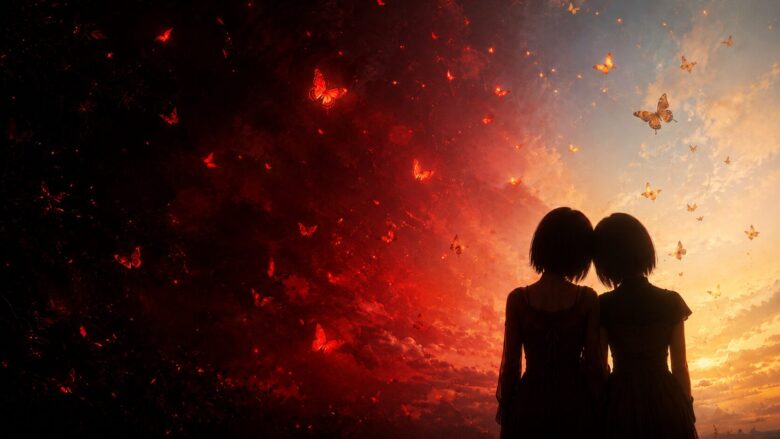
By moving through the three songs, Chou, Kurenai, and Utsushie, the form of “Together forever” in each ending becomes clearer.
Although the words of the promise remain the same, in one ending they become death; in another, freezing; in another, regret and dependence; and in another, they are remade as words for staying beside each other.
Endings Closest to “Chou” | The Wish to Return to One
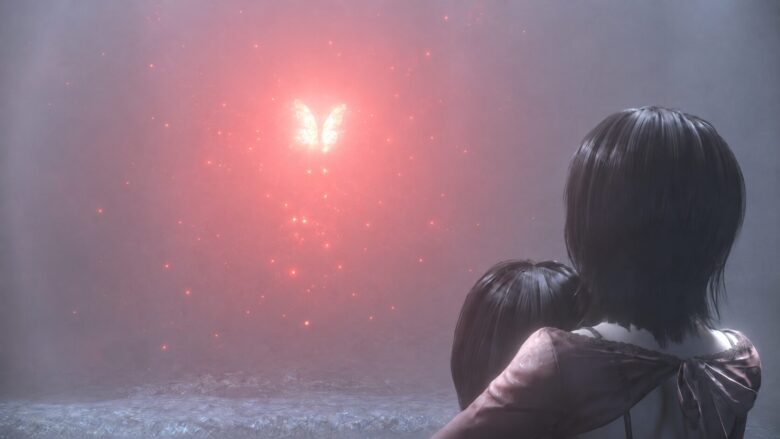
In the endings seen from this perspective, “Together forever” appears as a wish to return inside the other person.
Crimson Butterfly
In Crimson Butterfly, “Together forever” is fulfilled as a wish to become one through death.
Mayu is brought to an end by Mio’s hands and becomes a crimson butterfly.
A crimson mark remains on Mio’s neck, and Mayu’s words of promise continue to echo in her ears.
Mayu seems to have disappeared, and yet she never truly disappears from within Mio…
The voices of “I want you to break me” and “I want you to find me” end in something beautiful, yet cruel.
▷ Read the analysis of the Crimson Butterfly Ending
Frozen Butterfly
In Frozen Butterfly, “Together forever” freezes as possession.
Mio cannot bring Mayu to an end.
When Mayu’s wish to be broken is refused, her love can no longer remain gentle…
The butterfly that should have flown does not return to the sky, and instead freezes in Mayu’s hands…
What exists here is not love that refuses to be apart, but love that cannot let go.
▷ Read the analysis of the Frozen Butterfly Ending
Futagomori / Twin Enclosure
In Futagomori / Twin Enclosure, “Together forever” is closed inside a world meant only for the two of them.
Mio and Mayu are wrapped in a single kimono and become two crimson butterflies.
They are not chasing after each other…
They are not leaving each other behind…
They never leave each other’s side…
However, there is no future where they return alive.
Without being able to sprout wings and go outside, the eternity drawn inside Mayu’s world comes true.
▷ Read the analysis of the Futagomori / Twin Enclosure Ending
Black Flame Butterfly
In Black Flame Butterfly, “Together forever” becomes an impulse that tries to return everything to nothing.
Mio cannot leave Mayu behind, and sinks into the depths of Mayu’s wish.
That wish to become one eventually burns through even the boundary of the village.
What should have been a wish completed only by the two of them begins to swallow even the outside world…
The pain that kept smoldering crimson becomes black flame, staining the earth without end.
▷ Read the analysis of the Black Flame Butterfly Ending
Endings Closest to “Kurenai” | A Promise That Could Not Be Reclaimed
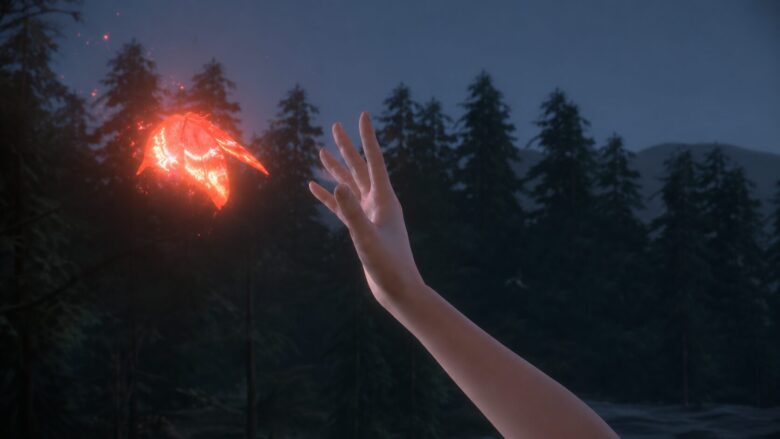
In the endings seen from this perspective, “Together forever” appears as the heat of a hand that could not reach.
Lonely Road Home / One Wing
In Lonely Road Home and One Wing, “Together forever” remains as the grief of the one who was left behind.
Mio escapes the village.
And yet, she cannot escape Mayu’s voice.
The person most precious to her is no longer beside her…
Even so, that presence continues to remain as a wound in her heart and body…
The regret of “I wanted to catch up” and “I wanted to hold on” keeps burning Mio forever.
▷ Read the analysis of the Lonely Road Home / One Wing Endings
Shadow Festival
In Shadow Festival, “Together forever” appears as a promise they only manage to reach in the final moment.
The pain of being left behind seeps into this ending.
At its center, however, is Mio reaching out this time toward Mayu, who had once felt left behind.
The two give up the future where they might have lived, and arrive at the same place in the instant of ending.
The regret they had carried quietly begins to come undone there…
Mio’s outstretched hand becomes an intention to fall into the same place as Mayu.
▷ Read the analysis of the Shadow Festival Ending
The Abyss
In The Abyss, “Together forever” reverses into dependence wearing the face of salvation.
This time, Mio finally takes Mayu’s hand.
But as the price, she loses her light.
Her hand reached Mayu…
And yet, they could not return to the relationship they once had…
Here, “the burning sin, steeped in crimson” is no longer only the pain of a hand that failed to grasp.
It becomes a knot that remains impossible to untie, even after that hand has finally reached.
▷ Read the analysis of The Abyss Ending
Endings Closest to “Utsushie” | Words for Remaining Separate and Staying Beside Each Other
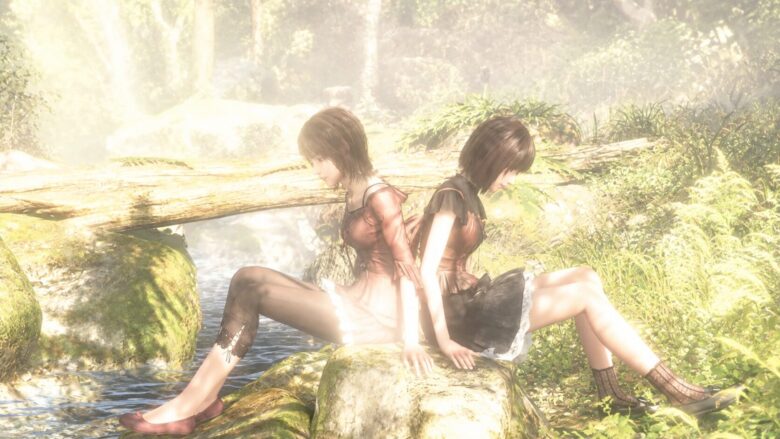
In the endings seen from this perspective, “Together forever” appears as words for two people who have learned their differences and choose to move forward beside each other.
The Promise
In The Promise, “Together forever” becomes a vow to remain beside each other.
Yae and Sae fulfill the promise of the past and become a crimson butterfly.
Mio and Mayu choose to live as separate people, and still stay together.
They cannot become the same…
And yet, they will not let go of this hand…
The misbuttoned places between them are undone, one by one, and fastened again anew.
▷ Read the analysis of The Promise Ending
Sprouting Wings + Remaining Sun
In Sprouting Wings + Remaining Sun, “Together forever” becomes a light through which the two illuminate the future.
Mio descends all the way into the depth of Mayu’s pain, and from there, the two return outside together.
They take each other’s hands and stand side by side.
Not in order to become one…
Not in order to close either of them away…
But in order to walk beside each other after knowing the other person’s pain…
The voice that called and the hand that chased finally reach the same pace here.
▷ Read the analysis of the Sprouting Wings + Remaining Sun Endings
“Together Forever” Is Not a Single Answer
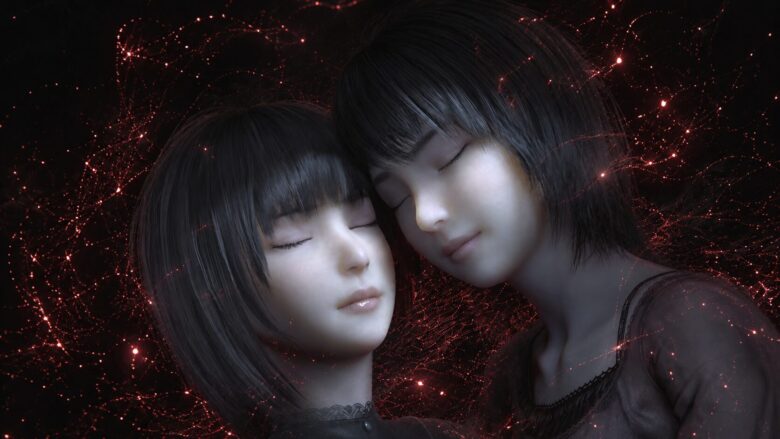
When placed side by side like this, it becomes clear that “Together forever” was never a single answer.
- It can be fulfilled through death.
- It can freeze as possession.
- It can close itself inside an inner world.
- It can become an impulse to sink into zero.
- It can remain as the remorse of having left someone behind.
- It can catch up only in the final moment.
- It can turn into dependence wearing the face of salvation.
- It can become a vow to stay beside each other.
- It can become a light through which two people illuminate the future together.
The same words, “Together forever,” change their shape each time an ending is layered over them.
And eventually, they begin to come undone—
from a promise that closes inward,
into words for stepping outside and walking forward.
Summary: The Answer to “Together Forever” Reflected by the Three Theme Songs
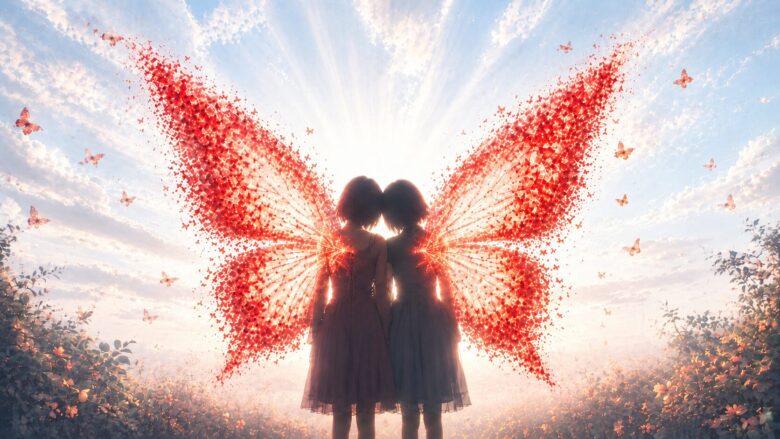
What Fatal Frame II: Crimson Butterfly portrayed was the pain of two people who had been split apart trying to return to one once more.
Mayu wanted to return to the time when she had been blended together with Mio…
Mio never wanted to let go of Mayu’s hand again…
Sae wanted Yae to find her…
Yae wanted to return to Sae…
Everyone was searching for their other half.
But a promise that seeks the wrong answer becomes a curse.
The wish to become one moves toward death.
The desire not to let go changes into possession.
The regret of having left someone behind smolders deep within as a crimson sin.
The three theme songs reflected that danger from different places.
Chou is the voice calling from within.
Kurenai is the heat of a hand that could not reach.
Utsushie is the vow to stand beside the other after learning their differences.
Calling.
Chasing.
Standing side by side.
This change was also the process by which Mio and Mayu’s “Together forever” was loosened and remade—
from the shape of a curse,
into a prayer for taking each other’s hands.
They cannot return to being one.
They cannot become the same.
Even so, they can remain together without drifting apart, illuminating each other along the way.
They call in Chou.
They chase in Kurenai.
And in Utsushie, they finally stand side by side.
What remained beyond that was not the answer of becoming one.
It was this:
to move toward the same morning in separate bodies.
That was the final form of “Together forever” that emerged at the end of the three theme songs.
Fatal Frame II: Crimson Butterfly Analysis Hub
Fatal Frame II: Crimson Butterfly Analysis Series
Analysis Article #2: The Cliff Scene|Why Mio and Mayu See Different Worlds
Analysis Article #5: The Opening Scene|The Unfinished Words and Their Connection to the Endings
Analysis Article #6: Main Story Analysis|How Did Mio Change Throughout the Story?
Analysis Article #7: Crimson Butterfly Ending|Why Did Mio End Up Killing Mayu?
Analysis Article #8: Lonely Road Home / One Wing Endings|Explaining the Price Mio Had to Bear
Analysis Article #9: Frozen Butterfly Ending|Mayu’s Tearful Smile and the Head in the Hina Doll Room
Analysis Article #10: Shadow Festival Ending|Why Did Mio Say, “This Time, We Fall Together”?
Analysis Article #11: The Promise Ending|The Meaning of “I’ll Never Let You Go Again”
Analysis Article #14: Sprouting Wings + Remaining Sun Endings|What It Means for Mio and Mayu to Return Alive
*This article is part of the “Fatal Frame II: Crimson Butterfly Analysis” series.
*The images used in this article include unofficial AI-generated images inspired by the world of the game, as well as screenshots from FATAL FRAME II: Crimson Butterfly REMAKE and Project Zero 2: Wii Edition. All rights to Fatal Frame II: Crimson Butterfly belong to Koei Tecmo Games.
*This article refers to certain official materials that are currently difficult to obtain. Their contents are summarized only where necessary for understanding the story, while the article itself focuses mainly on analysis and interpretation.
コメント欄