This article is part of my Fatal Frame II: Crimson Butterfly Analysis series, focusing on Mio and Mayu’s psychology in the Futagomori / Twin Enclosure Ending.
The Futagomori / Twin Enclosure Ending for Fatal Frame II: Crimson Butterfly was a planned ending that was not included in the final game.
However, its detailed flow is described in the official setting materials.
The Futagomori / Twin Enclosure Ending contains elements reminiscent of both the Frozen Butterfly Ending and the Shadow Festival Ending.
In this article, I will organize the ending’s story, then examine the meaning hidden in its title and what this ending was meant to reveal.
Please note that this article contains major spoilers for Fatal Frame II: Crimson Butterfly. If you want to review the main story first, I recommend starting with the Fatal Frame II: Crimson Butterfly main story overview before reading this analysis.
- Futagomori / Twin Enclosure Ending | Synopsis
- Futagomori / Twin Enclosure Ending Analysis
- What Does “Futagomori” Mean?
- What Did Mio Lose Sight of as Sae and Mayu Blended Together?
- Mio Moving Toward Mayu in the Darkness Replays the Memory of the Shadow Festival
- How Does “Together Forever. Because We Promised.” Change?
- Why Did the Childhood Game of Strangling Each Other Turn into Death?
- A Single Kimono | A Coffin, a Wedding Garment, and a Cocoon
- What Do the Two Crimson Butterflies Represent?
- Summary: What Was the Futagomori / Twin Enclosure Ending?
Futagomori / Twin Enclosure Ending | Synopsis
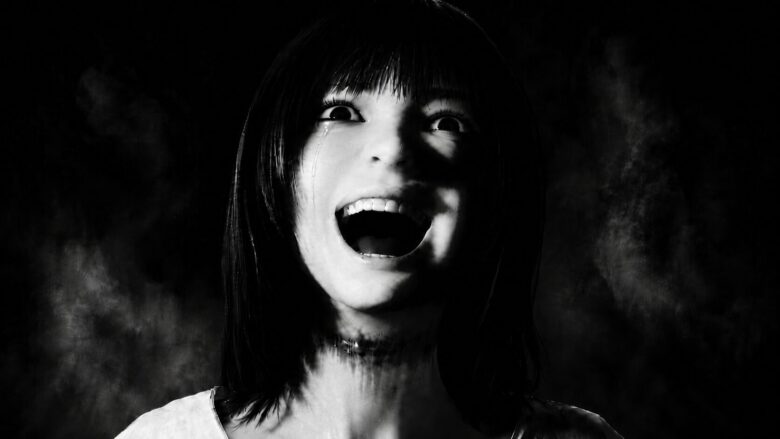
The Utsuro resounds, low and heavy.
Mayu stands at its edge.
Little by little, Mayu’s outline begins to overlap with Sae’s.
A broken sound cuts through the air.
Sae’s voice, as if shattered deep in her throat, rings out sharply at the edge of the Utsuro.
Is she laughing…?
Or is she crying out…?
Mio can no longer tell.
Mio gathers her resolve and takes a step forward.
At the bottom of the Utsuro, the darkness begins to stir.
The ground trembles as if something were pushing up from beneath her feet.
The rumbling grows deeper, and this time Sae’s outline begins to waver.
What had been Sae becomes Mayu.
What had been Mayu returns once more to Sae.
Her form can no longer belong to any one person.
When the shaking subsides, Mayu slowly approaches Mio.
Her hands reach toward Mio’s neck—
Looking at those outstretched hands, Mio begins to lose track of everything.
Is the older sister supposed to kill the younger…?
Or is the younger sister supposed to kill the older…?
Is Mayu going to bring Mio to an end…?
Or is Mio going to bring Mayu to an end…?
The form of the ritual, and even the boundary between the sisters, gradually collapse together with the swelling darkness.
Before she realizes it, Mayu is standing right before her.
“My leg hurts…”
“Run away without me…”
“Are you leaving me again…?”
“I won’t let you run away anymore…”
Voices and memories flow into Mio as if accusing her.
I can’t move…
I can’t run…
I can’t find an answer…
At that moment, the Utsuro trembles more violently than ever.
A torrent of darkness rushes in and swallows Mayu from behind.
In that instant, the thread of hesitation inside Mio snaps.
Fear…
Not knowing…
What I should do…
None of that matters anymore!
I want to be with Mayu!!
“Mayu…!!”
Mio leaps into the darkness.
She forces her way through the darkness pressing in on her.
But she cannot move forward easily.
Even when she reaches out, Mayu still feels painfully far away.
Before long, this situation begins to overlap with a memory from long ago.
The Shadow Festival at Kureha Shrine, when they were still children.
Mio pushes through the crowd.
Ahead of her, Mayu is crying.
Countless shadows pour between them.
Even so, Mio grits her teeth and keeps moving forward.
At last, she reaches Mayu.
Mayu’s tear-soaked face softens with relief.
In the next moment, Mayu throws herself into Mio’s arms.
“Mio… Mio… I’m… sorry…!”
Mio, too, cries as she holds Mayu tightly.
“Together… forever…
because… we promised…!”
With those words, the scene of the festival quietly comes undone.
When the vision fades, Mio is at the edge of the Utsuro.
Mio and Mayu, embracing in the darkness, have somehow begun to overlap with the figures of Yae and Sae.
The two look at each other, faintly satisfied.
Yae smiles mischievously and reaches both hands toward Sae’s neck.
A secret childhood game.
Placing their hands around each other’s necks.
Sharing pain.
Becoming one.
Realizing this, Sae gives a faint smile.
As she offers her throat, Sae also places her hands against Yae’s neck.
Yae tightens her grip.
Sae tightens hers.
Mio tightens her grip.
Mayu tightens hers.
Am I the one touching…?
Or the one being touched…?
Am I trying to bring this to an end…?
Or trying to become one…?
Even that sensation can no longer be distinguished.
Yae and Sae.
Mio and Mayu.
Blurred outlines.
Vanishing distance.
The touching hands, and the necks being touched, all begin to dissolve.
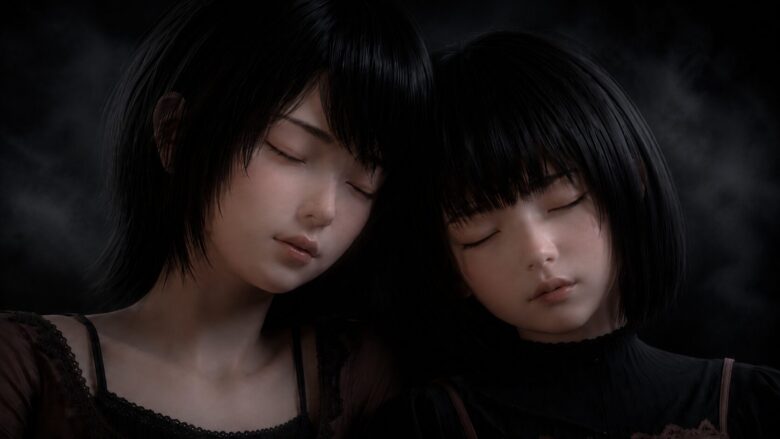
In the pitch-black darkness, Mio and Mayu are wrapped in a single kimono.
The two nestle so close together that it is no longer possible to tell which one is supporting the other.
“…Mio.”
“…Hm?”
“…Never mind.”
Mayu gives Mio’s hand a gentle squeeze.
The warmth of her palm.
Feeling that unmistakable connection, the two sink downward.
Softly,
the kimono falls.
From within it, two crimson butterflies appear.
Then, slowly, they begin to flutter away.
As if returning to some long-missed place.
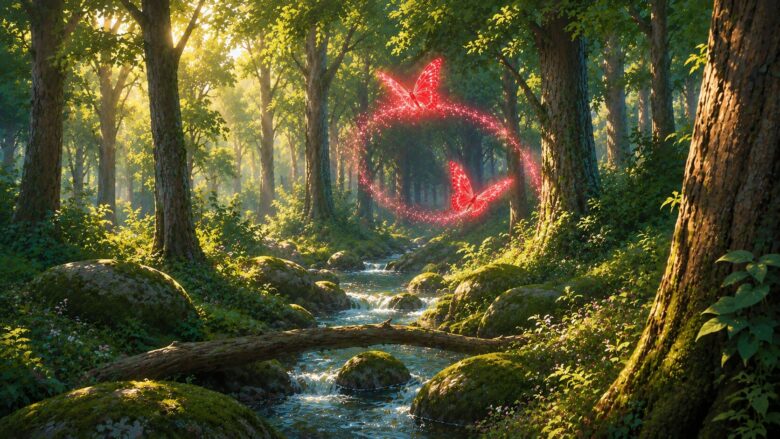
Eventually, deep in the forest where sunlight filters through the trees,
two crimson butterflies trace small arcs above the Stream of Memories.
Not chasing after each other.
Not leaving each other behind.
Side by side,
never to be separated again.
Futagomori / Twin Enclosure Ending Analysis
What the Futagomori / Twin Enclosure Ending depicts is not a form of salvation where Mio and Mayu escape outside and survive.
Nor is it an ending where one of them unilaterally confines the other, as in the Frozen Butterfly Ending.
What exists here is an ending where Mio and Mayu, without ever letting go of each other, dissolve into the same place within the darkness.
From here, I will examine the fusion meant only for the two of them shown by the Futagomori / Twin Enclosure Ending, and the sweet, dark salvation it contains.
What Does “Futagomori” Mean?
When thinking about the Futagomori / Twin Enclosure Ending, the first thing to examine is its title.
The word “Futagomori” suggests an image of two beings enclosed together inside a single cocoon.
Two separate beings shut themselves inside one shared interior.
With that meaning in mind, the final scene becomes deeply symbolic.
They do not return alive.
They do not rebuild their relationship within reality.
Instead, wrapped in a single kimono, Mio and Mayu sink into a closed world together.
This is where Mayu’s name begins to resonate strongly.
In Japanese, Mayu’s name can also mean “cocoon.”
A cocoon is a place where a life stays enclosed before emergence.
It is a space before going outside, a state in the middle of transformation, and an inner world cut off from everything beyond it.
In the Futagomori / Twin Enclosure Ending, Mio seems to enter that cocoon.
Not in order to draw Mayu out.
But in order to stay with Mayu.
Mio and Mayu no longer stand in separate places.
Even the question of who supports whom becomes unclear.
- They are inside the same kimono.
- They are inside the same darkness.
- They sink into the same place.
What exists there is not a cocoon for emerging outward.
It is a cocoon for closing inward.
If The Promise Ending is an ending that opens outward after accepting that Mio and Mayu are separate people, then the Futagomori / Twin Enclosure Ending is an ending where they let go of being separate and close themselves together inside one shared interior.
Not outward, but inward.
The wish of “Together forever” comes true in a place cut off from the outside world.
That is likely the meaning contained in the title “Futagomori.”
What Did Mio Lose Sight of as Sae and Mayu Blended Together?
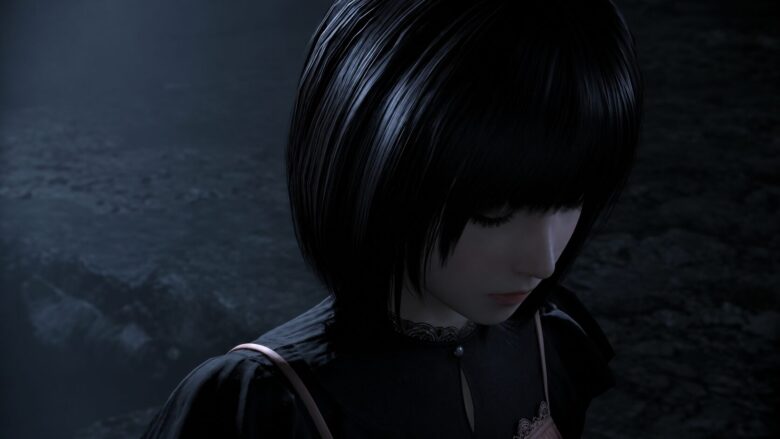
What Mio lost sight of was the boundary that allowed her to recognize the person in front of her as Mayu.
At the edge of the Utsuro, Mayu’s outline gradually begins to overlap with Sae’s.
What had been Sae becomes Mayu.
What had been Mayu returns once more to Sae.
Her form can no longer belong to any one person.
What is happening here is not simply possession.
It is closer to a fusion, where the pain of two girls begins to dissolve into each other.
Mayu, who was left behind by Mio.
Sae, who was left behind by Yae.
The wounds they carry are far too similar.
That is why Mio can no longer tell who is standing before her.
Is it Mayu…?
Is it Sae…?
That boundary begins to unravel within the darkness.
And it is not only Mayu and Sae who begin to unravel.
Mio herself is gradually drawn toward the wound Yae carried.
Mio let go of Mayu’s hand.
Yae let go of Sae’s hand.
As the twins of the past and the twins of the present move closer to the same wound, Mio begins to lose sight of which story she is standing inside.
- Am I facing Mayu as Mio?
- Am I facing Sae as Yae?
- Am I being blamed as the one who left someone behind?
- Or am I reaching out so I will never leave Mayu behind again?
Mayu is Mayu.
Sae is Sae.
Mio is Mio.
Yae is Yae.
The lines that should allow them to be seen separately gradually collapse.
Who am I supposed to save…?
What am I supposed to stop…?
Where do I have to go for this to end…?
None of these questions leads to a clear answer.
Even so, one thing remains.
—I do not want to be separated from Mayu.
What remained inside Mio was not a sense of what was right.
It was not an understanding of the ritual.
It was not the decision to bring Mayu back outside.
Only one feeling kept its shape within the collapsing boundaries.
I just want to be with Mayu…
“Fear…
Not knowing…
What I should do…None of that matters anymore!”
After shaking everything else off, Mio leaps into the darkness.
Because she had lost sight of so many things, Mio was able to give herself completely to the one feeling she could not lose—
the irreplaceable feeling she had for Mayu.
Mio Moving Toward Mayu in the Darkness Replays the Memory of the Shadow Festival
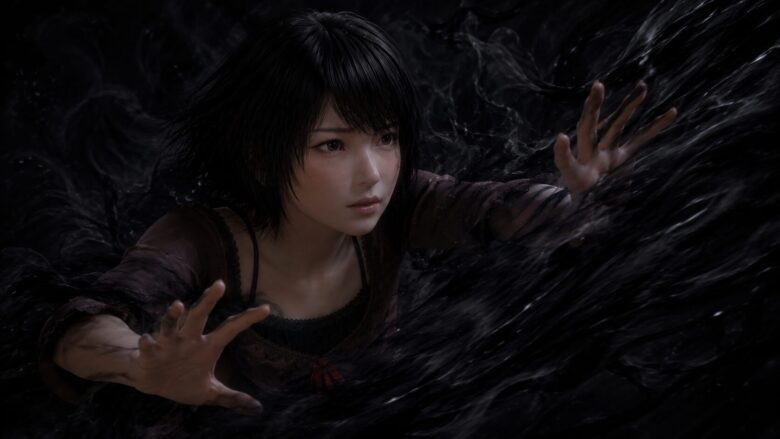
The scene where Mio moves through the darkness of the Utsuro overlaps with the memory of the Shadow Festival from their childhood.
Long ago, during the Shadow Festival at Kureha Shrine, Mayu lost sight of Mio in the crowd.
For Mio, it may have been nothing more than a brief moment of being separated.
But for Mayu, it was the first moment when the fear of Mio disappearing took shape.
That memory repeats itself within the darkness of the Utsuro.
- In the past, what separated the two was the crowd.
- Now, what separates them is the darkness overflowing from the Utsuro.
Both stood between Mio and Mayu, keeping them apart.
But this time, Mio forces her way into it.
She pushes through the darkness toward Mayu, who has lost sight of her and is crying.
What happens here is not a perfect rewriting of the past.
The fear of being alone that Mayu learned that day does not disappear.
The memory of losing sight of Mio cannot be erased.
Even so, Mio does not stop.
Even when darkness pours between them…
Even when the boundary between Mayu and Sae becomes unclear…
Even when she can no longer judge what is right…
Mio moves toward the place where Mayu is.
Toward the distance that was once blocked by the crowd.
Toward the place where Mayu once cried alone.
Toward the inside of the “Together forever” that failed to reach her that day.
This time, Mio enters it by her own will.
And when she finally reaches Mayu, the two embrace each other while crying.
What exists there is not the right answer.
It is not the resolution of the ritual.
It is not a path back to reality.
It is only Mayu’s warmth.
The distance that once came undone during the Shadow Festival is tied together again within the darkness of the Utsuro.
How Does “Together Forever. Because We Promised.” Change?
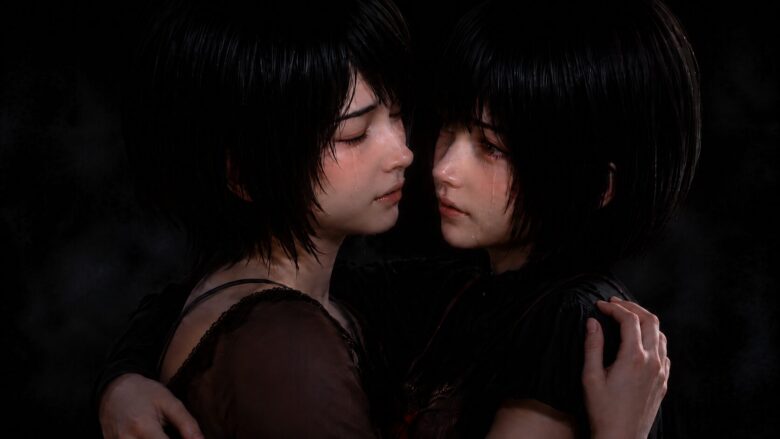
After pushing through the darkness, Mio embraces Mayu.
Mayu apologizes through her tears, and Mio, still crying herself, answers:
“Together… forever…
because… we promised!”
These were the words of promise that Mio and Mayu had repeated again and again.
The boundary between Mayu and Sae has become uncertain.
The meaning of the ritual has collapsed.
Mio no longer knows what is right.
And yet, what remained inside Mio was only one feeling:
I do not want to be separated from Mayu.
In this scene, “Together forever. Because we promised.” was probably not a phrase meant to lead them toward the future.
Rather, it was a phrase meant only to reassure Mayu within a world that was falling apart.
With no clear answer left,
Mio can only tell the crying Mayu that she is there with her.
As if tracing once more the shape of the promise they made when they were children.
“Together forever”
Originally, it was an innocent promise from a time when the two of them did not yet know they were separate people.
But after their hands were separated at the Shadow Festival,
after Mayu fell from the cliff,
and after they touched the memories of Yae and Sae in Minakami Village,
those words slowly grew heavier.
What does it mean to be together?
- Does it mean never letting go of each other’s hands?
- Does it mean falling into the same place?
- Does it mean bringing the other person to an end?
- Does it mean becoming one?
The Futagomori / Twin Enclosure Ending does not give a clean answer to that question.
Mio embraces Mayu, and uses the word “promise” only so that she will not have to let go of Mayu in this moment.
That is what makes this scene so painful.
The moment Mio says, “Together forever,” the two do not move toward the outside.
Instead, they move closer to an even deeper darkness.
The words of promise no longer sound like a signpost meant to keep the two of them alive.
They become a signal for sinking into the same place.
I don’t know what is right.
I don’t know how much of the Mayu before me is still truly Mayu.
Even so, I cannot bear to leave the crying Mayu alone.
For Mio, this was the only answer she could give.
The promise is still there.
But that promise is changing into a thread that binds the two of them together inside a dark cocoon.
Why Did the Childhood Game of Strangling Each Other Turn into Death?
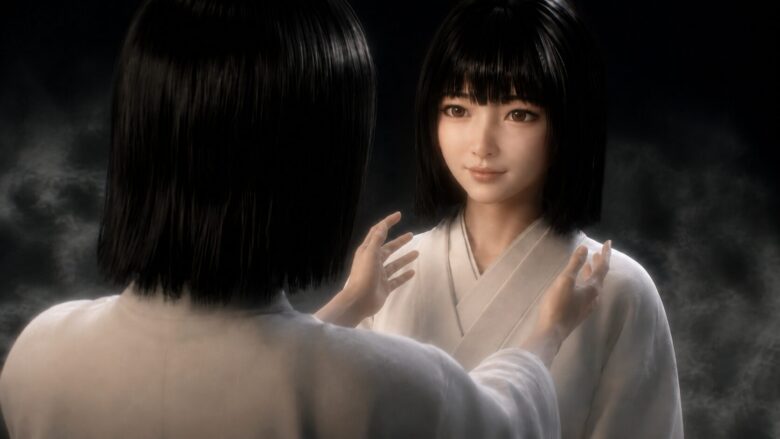
The most unsettling scene in the Futagomori / Twin Enclosure Ending is the moment when Mio and Mayu place their hands around each other’s necks.
Just before this, Mio and Mayu are embracing in the darkness, and their figures begin to overlap with Yae and Sae.
Yae smiles faintly, almost playfully, and reaches both hands toward Sae’s neck.
Sae, too, places her hands against Yae’s neck.
A secret game known only to the two of them since childhood—
- placing their hands around each other’s necks
- sharing pain
- becoming one, just between the two of them
At this point, the Crimson Sacrifice Ritual is no longer merely a ritual.
Originally, the Crimson Sacrifice Ritual had the form of the older sister killing the younger sister.
There was, at least in theory, a role determined by the order of birth.
But here, that difference collapses.
Yae tightens her grip.
Sae tightens hers.
Mio tightens her grip.
Mayu tightens hers.
It is no longer a scene where one person simply brings the other to an end.
The two touch at the same time, are touched at the same time, and sink into the same depth together.
Are they touching?
Are they being touched?
Are they trying to bring this to an end?
Or are they trying to become one?
Even that sensation dissolves within the darkness.
In Crimson Butterfly, Mio reaches toward Mayu’s neck.
In Frozen Butterfly, Mayu reaches toward Mio’s neck.
In Futagomori / Twin Enclosure, they reach toward each other’s necks.
- They want to touch each other.
- They do not want to let go of each other.
- They want to erase the boundary between them.
Those feelings likely appear in the form of strangling each other.
What cannot be overlooked is that this sensation was not something born for the first time after they came to Minakami Village.
In the backstory, it is revealed that Mio and Mayu also played the same game as Yae and Sae when they were children.
- placing their hands around each other’s necks
- sharing pain
- feeling the boundary blur as consciousness fades
A dangerous game meant to bring the distance between oneself and the other half as close to zero as possible.
The act of strangling each other may not have originated from the customs of Minakami Village.
Rather, it may have been the form that appeared when the twins’ original desire to return to oneness rose to the surface.
And in this scene, that game overlaps with the Crimson Sacrifice Ritual.
Each time they tighten their grip, the distance between them disappears.
Each time their breath catches, the boundary between them collapses.
The game that once allowed them to confirm the feeling of returning to one ultimately brings about real death.
A Single Kimono | A Coffin, a Wedding Garment, and a Cocoon
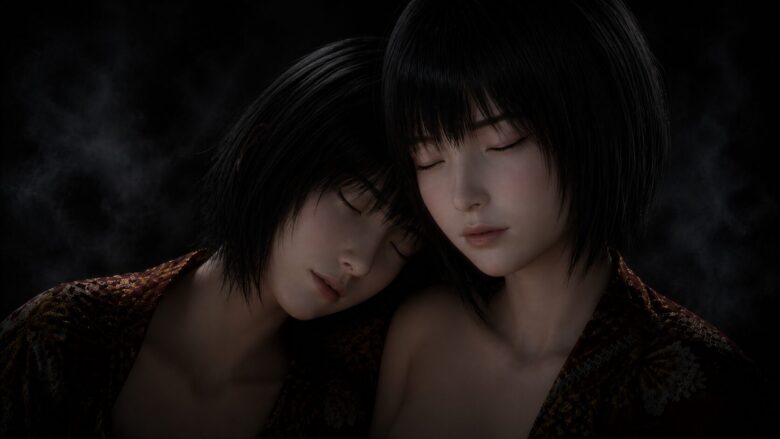
After Mio and Mayu place their hands around each other’s necks, what appears next is the image of the two of them wrapped together in a single kimono.
Their joined hands remain tightly clasped.
This kimono is a garment that quietly envelops Mio and Mayu.
- It looks like a coffin.
- It looks like a cocoon.
- It looks like a wedding garment.
In the actual image, it is depicted as a single kimono.
Even so, layered within it is an image resembling a wedding: two people wearing the same thing at the very end, heading toward the same place.
The director’s concept notes include the phrase “double wedding dress.”
However, this is not a blessed wedding.
It is not clothing meant for walking toward the future.
It is clothing for letting go of the outside world and heading toward the end, just the two of them.
In the darkness, the two exchange only a few words.
“…Mio.”
“…Hm?”
“…Never mind.”
Mayu tries to say something, but in the end, she swallows the words.
But perhaps, in this scene, there was no longer any need to put it into words.
- Mio is beside me.
- Our hands are joined.
- We are wrapped in the same garment, sinking into the same darkness.
Mayu’s “Never mind” does not feel like an unspoken confession she failed to put into words.
Rather, it feels like a silence confirming that they are already in the same place, even without words.
Inside a single kimono, the two are almost too close.
Which one is supporting the other?
Which one is leaning on the other?
Which one is wrapping the other?
Those distinctions have almost lost all meaning.
Only the warmth of their joined hands remains.
This scene is beautiful because the two have quietly settled into the same place.
But that beauty is not bright.
The two will not walk out from there into the morning sun.
They will not join hands again within reality.
Still wrapped in a single kimono, they sink quietly, and eventually begin to leave behind the shape of human beings.
The kimono falling softly may look like the moment when the final vessel that held the two of them becomes empty.
From within it, two crimson butterflies appear.
The kimono was a garment that wrapped Mio and Mayu’s ending.
At the same time, it was also a cocoon through which they would become butterflies.
Leaving behind only the sensation of the hands they had held, the two quietly slip away from reality.
What Do the Two Crimson Butterflies Represent?
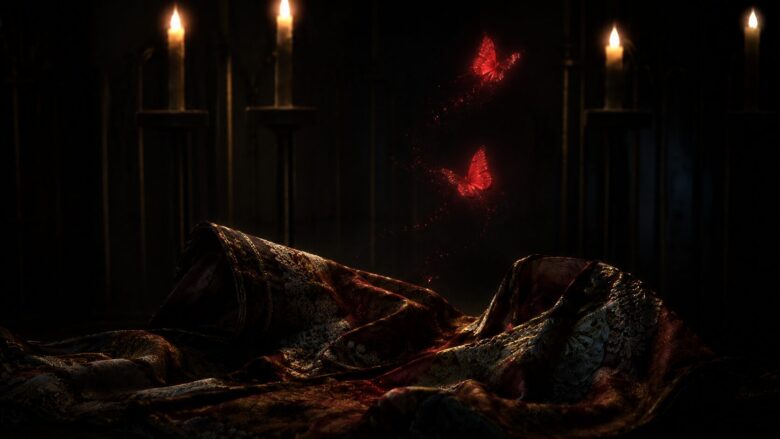
At the end of the Futagomori / Twin Enclosure Ending, Mio and Mayu lose their human forms and are transformed into two crimson butterflies.
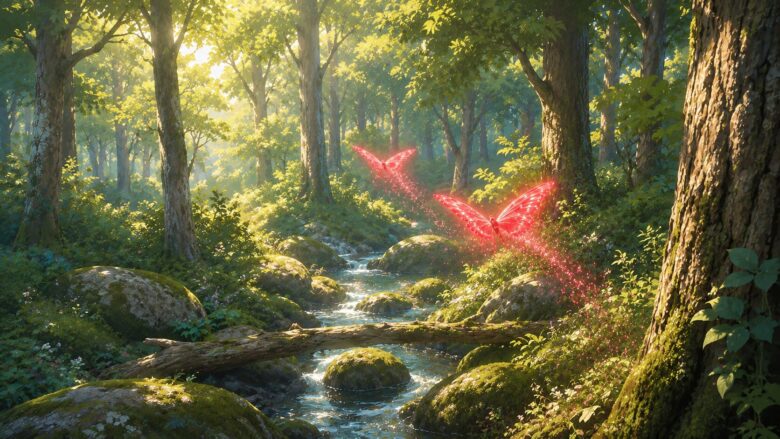
The setting is the Stream of Memories.
It is the place where the two played as children, and also the entrance to the memory that leads to the cliff accident.
Eventually, deep in the forest where sunlight filters through the trees,
two crimson butterflies trace small arcs above the Stream of Memories.
Not chasing after each other.
Not leaving each other behind.
Side by side,
never to be separated again.
If we look only at this scene, it feels as though the “Together forever” that Mio and Mayu had always longed for has finally come true.
However, what matters here is that they do not become one butterfly.
They become two crimson butterflies.
In The Promise Ending, Yae and Sae join hands and become a single crimson butterfly.
Yae returns.
Sae accepts her.
The two join hands.
At that moment, the knot that had remained between them finally comes together into one ending.
A single crimson butterfly was likely a butterfly that had finished fulfilling a promise from the past.
The Mio and Mayu of the Futagomori / Twin Enclosure Ending, however, are different.
They still belonged to the world of the living.
They should have still had a future where they could live in reality as separate people.
And yet, they remain inside a closed world.
The two crimson butterflies were likely butterflies enclosed within a promise meant only for the two of them.
- The single butterfly in The Promise represents two people who had been separated finally returning to one.
- The two butterflies in Futagomori / Twin Enclosure represent two people who wanted to become one remaining separate, yet staying together to the end.
Both may look like forms of becoming one, but their meanings are very different.
In The Promise, the knot of the past is untied, and the two are joined as a single butterfly.
In Futagomori / Twin Enclosure, two people who have abandoned the future are joined while still remaining two butterflies.
They cannot become completely one.
They do not choose to live as human beings.
Instead, they close themselves into the same place while remaining separate existences.
The two crimson butterflies have a shape that resembles happiness.
And yet, hidden beneath the sound of their wings is the fragility of having given up on returning alive.
That is why the two butterflies flying over the Stream of Memories are beautiful.
Summary: What Was the Futagomori / Twin Enclosure Ending?
In Futagomori / Twin Enclosure, Mio and Mayu fulfill their childhood promise of “Together forever” inside a closed world meant only for the two of them.
It seems like salvation, and yet it is confinement.
It seems like happiness, and yet it is an ending where they could not live on in reality.
The promise of “Together forever”—
It was kept not by continuing to live,
but by staying together to the end.
If Futagomori / Twin Enclosure is an ending where Mio and Mayu give up on returning alive and close themselves into a fusion meant only for the two of them within the darkness, then Sprouting Wings + Remaining Sun are endings where they touch the depth of becoming one, but do not remain closed inside it, instead taking each other’s hands again within reality.
Next time, I will examine what the Sprouting Wings + Remaining Sun Endings reveal—a form of salvation where the two take each other’s hands once more after touching Mayu’s pain.
Thank you for reading, and I hope you will stay with me for the next article.
Fatal Frame II: Crimson Butterfly Analysis Hub
Fatal Frame II: Crimson Butterfly Analysis Series
Analysis Article #2: The Cliff Scene|Why Mio and Mayu See Different Worlds
Analysis Article #5: The Opening Scene|The Unfinished Words and Their Connection to the Endings
Analysis Article #6: Main Story Analysis|How Did Mio Change Throughout the Story?
Analysis Article #7: Crimson Butterfly Ending|Why Did Mio End Up Killing Mayu?
Analysis Article #8: Lonely Road Home / One Wing Endings|Explaining the Price Mio Had to Bear
Analysis Article #9: Frozen Butterfly Ending|Mayu’s Tearful Smile and the Head in the Hina Doll Room
Analysis Article #10: Shadow Festival Ending|Why Did Mio Say, “This Time, We Fall Together”?
Analysis Article #11: The Promise Ending|The Meaning of “I’ll Never Let You Go Again”
Analysis Article #14: Sprouting Wings + Remaining Sun Endings|What It Means for Mio and Mayu to Return Alive
*This article is part of the “Fatal Frame II: Crimson Butterfly Analysis” series.
*The images used in this article include unofficial AI-generated images inspired by the world of the game, as well as screenshots from FATAL FRAME II: Crimson Butterfly REMAKE and Project Zero 2: Wii Edition. All rights to Fatal Frame II: Crimson Butterfly belong to Koei Tecmo Games.
*This article refers to certain official materials that are currently difficult to obtain. Their contents are summarized only where necessary for understanding the story, while the article itself focuses mainly on analysis and interpretation.
コメント欄